 No one does corporate espionage quite like Olivier Assayas. We watched Boarding Gate a little while ago and at one point I had to pause the DVD and ask aloud, “If you could make a movie about anything you wanted, why would you choose this story?” Brittany didn’t know for sure, but what really prompts my question isn’t so much a distaste for office intrigue – which is a perfectly valid genre to work in – but the way the writer/director goes about putting these movies together. There’s something really mind-blowing about how Assayas not only over-thinks the story, but how he consistently gets the kind of banal details that many filmmakers live or die by totally wrong, then, in the next scene, spends far too much time on what feels like the actual conversations these working professionals would really have with their colleagues – conversations that other filmmakers (the same filmmakers so anxious to portray banal everyday-osity) would find far too technical and specific and would feel obligated to water down with more universal factors in an effort to restore audience relate-ability.
It happens all the time in Boarding Gate: time and again the actual work that Michael Madsen’s character does (which is central to the story) is vaguely explained; apparently it’s financial – tied to the international markets – and he made some bad discussions a while back. This seemingly deliberate lack of specificity forces me to wonder, has Assayas ever had a real job? Has he ever worked in an office? Why, if this character’s job is so important to his movie, did he choose to do no actual research and leave the details out, which tends to be fairly common practice on the stage – where common knowledge dictates that those kind of details only hold a play back – but are routinely included in films – where realism tends to trump the black backdrop stylization of the modern theater? But then, towards the end of the film, Kim Gordon appears on the scene (Sonic Youth created the music for Demonlover, which I promise I’ll get to shortly), and gives the always phenomenal Asia Argento this incredibly detailed and (according to Brittany, who works in the industry in question) incredibly accurate description of the garment production work she oversees in Hong Kong.
That’s the contrast that makes these films so interesting: the purposeful omission of details (in an almost studenty way) that would ground the story in a semi-realistic world clashes with instances where the realism become un-filmic – which sets Assayas up to do what he does best, work with structure. And that’s really what sets Demonlover apart from Boarding Gate, it’s much a more successful and intriguing film because the narrative unravels in such a complex and disturbing way.
Here’s a quick synopsis: Diane (the steely Connie Nielsen), a corporate saboteur secretly employed by an Anime distribution outfit called Mangatronics to ensure that the takeover of the Japanese production studio TokyoAnime by the powerful VolfGroup corporation does not divert Mangatronics’s current market share to its rival, the American distribution company Demonlover. The resourceful Diane quickly dispatches her superior at Volf, a woman named Karen (Dominique Reymond) who just bought a jet black Audi TT, and takes over the details of the takeover. Diane and fellow Volf account exec Herve (Charles Berling) head to Japan to finalize the deal, which, the audience is told, is barely legal (who knows why). After a long working lunch discussing the legality of characters without pubic hair, Diane and Herve are taken over to the Anime-Tokyo studio, where they are turned on to the state of the art work that TokyoAnime is making (3-D animation not quite on par with the intro to Diablo II) as well as the existing product line (our DVD is censored, and the cartoon penetration is pixelated, but apparently there’s a 2-disc directors cut out there, somewhere).
Back in Paris, events take a quick turn when Gina Gershon, an executive at Demonlover, is picked up at the airport by Karen’s former assistant Elise (the lovely Chloe Sevigny, playing a character who’s always sticking her baby-sitter with overtime). Diane makes a number of moves to block Volf from signing a deal with Demonlover that would put Mangatronics out of business while CEO Volf himself (in Paris for only 16 hours) questions the Demonlover top brass about their involvement with an interactive torture site called Hellfire Club. Desperate to thwart the Demonlover contract, Diane dresses up in the kind of tight clothes required for willowy B&E and things start to go off the rails as the consequences of Diane’s actions – and some surprising office allegiances – are revealed.
The Hellfire Club site factors prominently into the latter half of the film and much screen time is devoted to Flash-heavy site intros. I know, it’s a bit hard not to smirk at the 21st century-osity of it all, but that’s okay – even though Foster Wallace didn’t exactly nail impending technological developments, Infinite Jest certainly doesn’t suffer. As the primary themes Assayas is working with become apparent early on: desensitization to sex and violence in these modern times, how even underground pornography – which seems so independent – is now a corporate commodity, how amorality and corruption seep upward into the highest strata of corporate enterprise with the acquisition of a vice-based product line; so do the techniques: the film is shot predominantly in shakey, hand held close ups of characters that are always smoking, classic film noir tropes are employed throughout, not only are there double crosses aplenty but, as one reviewer pointed out, Diane is knocked out more times than Sam Spade and Philip Marlowe combined. Darker themes emerge in the second half regarding the repulsion/allure of sadomasochism and voyeurism and the surrender of sexual control.
But it’s not the contemporary themes and the use of film styles that make this movie so dynamic, it’s Assayas’s use of his own technique: the inversion of these relatively commonplace elements by focusing the audience’s awareness on the surface level, requisite plot, which at time feels so paper-thin that there are moments where the lack of any kind of realism is actually distracting (at one point Diane is trying to reach Volf by phone but he’s unavailable, “tied up with that real estate thing again”; the first floor of the Volf corporate headquarters is a stock boiler room full of young men with telephones in each hand yelling, “Buy” and, “Sell” arbitrarily, while the second floor is reserved for too sexy executives working diligently on contracts for web sites like sexslavelaracroft.com; there’s a scene where a DJ is playing with faders on a mixing board like an over-enthuisiastic extra without any knowledge of the impact that such toying would have on the floor of a Japanese club), which forces audiences to recognize the plot is purely superficial – then Assayas hits back with a scene like the long lunch meeting (a scene that’s too realistic), and the resulting reality discord is an ideal set up for the way that the plot breaks down, not so much in a typical surrealist fashion (comparisons have been made –negatively – to Lost Highway and – positively – to Videodrome), but more along the lines of Blow Up or Glamorama, where the plot folds in on itself and all the topical content falls away to reveal something much darker and unsettling than could ever be reached through the straight addition of its parts – like Easton Ellis and Antonioni, Assayas practices a bizarre form of narrative mathematics; like Lynch and Cronenberg, he wields technological dread and sexual anxiety to create the atmosphere of a nightmare that’s gone on too long.
I don’t want to spoil the surprise so please, check it out for yourself. While I can’t promise you’ll like it (it was booed when it premiered at Cannes), you’re not likely to see anything else quite like it.
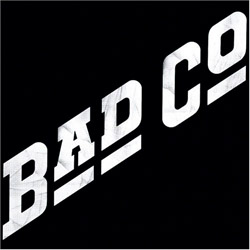 I know, at first two whole discs of anything can seem overwhelming. But come on, it's Bad Company, a band that loves to sing about love. Listen to these extremely romantic song titles: “Can't Get Enough (of your Love)”; “Ready For Love”; “Good Lovin' Gone Bad”; “Feel Like Makin'
 Joe Don Baker (I don't know if you've ever seen “Mitchell”–if you haven't, rent the MST3K skewering right away) wants to close down a video arcade run by a guy who can't have sex or play video games because of what he saw reflected in the darkened screen of a broken Miss Pac console one terrible night. The theme song “Totally Awesome Video Games” brings a smile to my face every time I hear it, as does another awesome song from the soundtrack, “Vidiots”.
 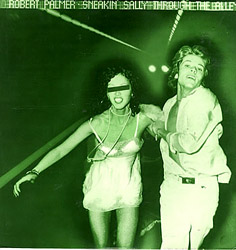 Although “Simply Irresistible” and “Addicted to Love” are awesome songs and the corresponding videos that aired on MTV in the 80s will never go out of style, once upon a time Palmer was a critically acclaimed rock/soul/funk/R&B singer. Who knew? His debut album, Sneaking Sally Through the Alley, is so much fun, you'd never believe it came from the guy who didn't mean to turn you on. The album kicks off with this phenomenal 9 and a half minute medley, I think the first part is about cocaine:
 We got it awhile back, but my mind frequently wanders back to when I ate it.
 This is amazing and it's really cheap too. French bread with Vietnamese cold cuts are a match made in a colonial culinary dream. There's one with pate (which is awesome) and there's one that's just called the Number 1. You probably should get them both.
 Back in the old days, the lead singer of the Go-Gos was totally hot. And there are rumors about some crazy backstage sex tape that make the Belinda of yore seem even hotter (as if that's possible). Up until “Heaven is a Place on Earth”. After that, forget about it.
  Whenever I'm in Colorado Springs, CO, I make a point to visit this extraordinary mountaintop zoo. Imagine a really clean, relatively uncrowded, pleasant smelling, non-depressing zoo. That zoo you just imagined is this zoo!
 I don't really bake anything, but I love it whenever these cookies are baked for me. The two sticks of butter make all the difference.
 We went a few months ago with Doug and Astrid and tried the cucumber and a hibiscus varieties. Both were awesome. There were several more flavors to choose from, these two just jumped right of the menu.