Places to Visit »Muttontown Preserve

King Zogs Castle - Muttontown PreserveComposed of over 550 acres, the largest natural preserve on this half of Long Island boasts a well preserved estate and plenty of equestrian paths, but by far the most interesting portion of the park is the ruins of King Zog’s castle.

The deposed Albanian king bought the 60 room mansion (and walled garden –which is now hauntingly overgrown) known as Knollwood back in 1951. Since Zog fled with a substantial portion of Albania’s gold and jewels in his possession, local yokes and adventurers assumed he must of hidden great wealth in the walls of his newly purchased property. So, while Zog was negotiating with the US government to obtain citizenship for his 120 person court (which ended up being a no go, Zog settled in France), treasure hunters looted the home, inflicting so much damage that the building had to be demolished in 1959.

See more: Places to Visit


Be the first to leave a comment →
Posted on December 8, 2008

Spend a Couple Minutes »Mane N Tail

mane n tailSure, I realize that not everybody has a beard (yet), but I just wanted to pass along this grooming tip to anyone who is, or may know someone who is in the process of beard development.

Everybody complains about how much a young beard itches – and it’s true, there’s definitely some discomfort there – but far too often this discomfort causes dudes to abort their beards before they can grow to maturity.

Stop the insanity! This product, originally developed for horses by the Straight Arrow company of Bethlehem, Pennsylvania, can totally reduce early onset itchiness when used frequently. Remember, there’s no such thing as over shampooing and conditioning your beard.

See more: Spend a Couple Minutes


Be the first to leave a comment →
Posted on December 8, 2008

Spend a Couple Hours »The Pool at the Y

Greenpoint YWe live across the street from the Y, so it totally made sense to join back when we first moved in. I’m not super into exercise classes or devices, so the pool has always been the most appealing way to burn calories.

While it’s not very big (at all), it’s pretty quiet right after 7:30 in the morning and it’s open until 10pm (I think)… I just discovered that swimming isn’t very effective for burning calories, running is. Oh well, swimming in the pool, inhaling in the calming aroma of chlorine has always been a satisfactory experience for me, and I don’t see it changing.

See more: Spend a Couple Hours


Be the first to leave a comment →
Posted on December 8, 2008

Drinks »Chicago Fizz

Honestly, I don’t like the taste of booze that much. My taste skews away from what you might consider more sophisticated adult beverages like Old Fashioned (and wine) toward Mudslides (which are all I drink on tropical vacations) and Pina Coladas. This usually isn’t a big issue, beer tends to be on the menu most everywhere, but with the recent rise of the expensive cocktail bars, I’ve found myself in a couple of real jams.

Hotel Delmano offers St. Regis cocktails, which are certainly drinkable in copious amounts, but it was on a visit to Little Branch that I discovered this delightfully potent potable. Rum, port, lemons, sugar, carbonated water and an egg combine to make this frothy treat which I highly recommend for those of you not wanting swill a G&T.

See more: Drinks


Be the first to leave a comment →
Posted on December 8, 2008

Style Icons: Female »Kathryn Bigelow

Point Breaker

Hands down, this foot chase is the best action sequence I’ve ever seen. It’s no secret that I love Point Break, but I really love its intellectual director, onetime wife of the (I assume) insufferable James Cameron, Kathryn Bigelow – just listen to her discuss Near Dark.

While it’s true that Strange Days wasn’t quite what I hoped for and I skipped K-19: The Widowmaker altogether, there’s tremendous buzz building up around the Hurt Locker, and I’m really looking forward to seeing it.

See more: Style Icons: Female


Be the first to leave a comment →
Posted on December 8, 2008

Style Icons: Male »Stephen Malkmus

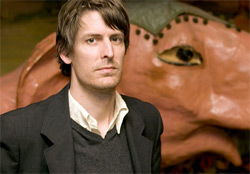
Stephen MalkmusIt’s not like Brittany’s going to pick a Pavement song any time soon, mainly because it’s music that tends to work best for dudes. My good friend Danny‘s copy of Slow Century sits prominently on a bookshelf in our living room and whenever we have a party Marcus considers borrowing is, but he knows he’d have to watch it by himself –?hich is the main reason I’ve yet to see it.

Crooked Rain, Crooked Rain and Slanted and Enchanted are my picks (though there’s a lot to like about Terror Twilight and Wowee Zowee), mainly because the double disc editions that Matador released a couple of years ago came out out at a time when I was working in a place that sold CDs and I was able to listen to the amazing previously unreleased material all day long. But Malkmus’s post Pavement stuff is awesome as well. I’m particularly partial to Pig Lib, where I think that as a guitar player he really began to face the truth (lolz) and reflect on just how little distance there was between where his own work was going and the music of the man who, throughout the entire 1990s stood as his diametric opposite, Trey Anastasio.

But it’s not just his guitar playing, it’s his attitude that makes him one of may all time favorite famous dudes. I don’t think I’ve ever read an interview where he doesn’t put someone down – and he’s usually he’s totally in the right. On Billy Corgan:

“I don’t really know. Some people say he’s nice, but he’s full of himself. He has a lot of fans so I can see how that happens. They weren’t very good in concert, they sounded real bad.”

Other times, he’s just being a dick:

“For all the mistakes that were made marketing Pavement, it comes down to the song; and the song [Cut Your Hair] was pretty good, but it just wasn’t the song of the time. The Offspring song [“Come Out and Play”], “Cannonball” by the Breeders — those were bigger songs people could get behind.”

Kim Deal responded pretty awesomely on the last page of a magazine I am somehow subscribed to for life (I haven’t paid them in at least 3 years):

“Yeah, I liked Pavement. But if he keeps fucking smacking his mouth off about me, I’m going to end up not being able to listen to any of their fucking records again. Anyway, I thought, God, man, “Cut Your Hair” isn’t as good of a song as “Cannonball,” so fuck you. How’s that? Your song was just a’ight, dawg.”

Fair enough.

See more: Style Icons: Male


Be the first to leave a comment →
Posted on December 8, 2008

Hunks »Kelly MacDonald

kelly macdonaldI simply cannot get over how adorable this woman is. Sure, she caught my eye in Trainspotting and Gosford Park, but it wasn’t really until No Country for Old Men that I totally realized the full level of her charm.

Then we watched State of Play – and I was totally blown away by her turn as Della Smith. We even tried to watch the Girl in the Cafe, with MacDonald and Bill Nighy, how could things go wrong, right? They can, it’s terrible!

But that hardly matters – it’s not like I really like Sam Rockwell all that much, but I’m still looking forward to in-demanding Choke in 2009.

See more: Hunks


Be the first to leave a comment →
Posted on December 8, 2008

Albums »The Lamb Lies Down on Broadway

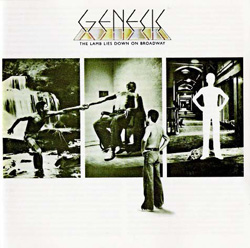
Genesis The Lamb Lies Down on BroadwayWhat comes to mind when someone brings up a progressive rock concept album? Keyboards, for sure. Labyrinthine narrative structures, definitely. An intellectual earnestness that fluctuates between the pretentious and the downright naive, check. Chops, absolutely. Rampant egotism, usually captured best in ponderous interviews (though sometimes off the cuff outbursts at unappreciative but paying audience members do the trick), right. Awesome album art and unclear liner notes, yes. British (maybe even Canadian) origins, most likely. Finally, the real signature bullet point is ambition, which is commonly paired with excessive control on the part of one (or more – and it there’s more than one then they’re typically at odds) true-sighted dude with stringy haired (most likely bearded) seen almost exclusively smoking cigarettes inside a recording studio (thanks, VH1 Classic).

It’s not necessarily an alluring picture, and it’s easy to understand how the the bloated prog rock behemoths of the 1970s, all keyboards, drum solos and obtuse, sometimes downright ridiculous plot lines shoe horned into these self-important records, spawned a backlash so severe that punk music was created as a cultural antidote. But there are a couple of things that are easy to forget: first off, this stuff was hugely popular. The Lamb Lies Down on Broadway, which is rigorous and decidedly an acquired taste, was still mainstream enough that while doing some preliminary research I came across a photo of a billboard outside Orlando advertising the album and the ensuing tour. If there were billboards for OK Computer along Florida highways, I missed them. In our era of don’t-get-it-twisted popular music, thoughtful experimentation isn’t always rewarded and, for the most part, downright unprofitable.

Another element that doesn’t always get factored into our assessments is the live performative side: light shows, costuming, immersive atmosphere. Album-oriented rock is by its very nature bound to two (sometimes four) vinyl sides, but the early work of Genesis in particular (Peter Gabriel was described as a multi-media artist decades before the term really caught on) involved elaborate stage elements, which, judging by images like this, are just as awesome today as they were in the early 1970s.

So maybe it’s time to give this thing another shake – and besides, this album has always been a favorite of my dear aunt Graye’s, and she’s got great taste

Soooo, here’s the story: Rael, your typical Puerto Rican hustler/graffiti artist is hanging out in Midtown when a black trans-dimensional wall appears. The wall chases Rael all the way up to Columbus Circle before absorbing his body and knocking him out. Regaining consciousness first in a womb, then in a cage, Rael spots his brother John, who ignores his pleas for help. The cage dissolves and Rael makes his way to a warehouse – a warehouse full of packaged human beings! Rael flees into a nearly perfect reconstruction of the New York City of his youth and his mind drifts back to the time when he was studying a sex manual in preparation for intercourse.

After a lengthy flash back Rael returns his attention to the subterranean corridor in front of him and winds up in a room full of people trying to escape this strange underground realm. Everybody gives Rael tons of advice on escape (there are 32 doors, but only one exit), but it’s too much and he flees again, this time with blind woman who leads him into a dark cave where some real soul searching takes place before Rael meets Death himself, who blows smoke in his face. Death departs and Rael makes his way into a room with a pool – a pool full of snake women (the Lamia) who try to eat him alive before dying of ecstasy!

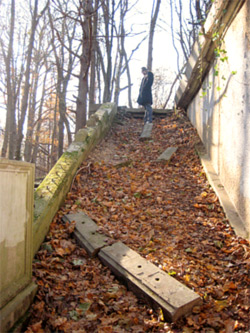
Rael consumes their bodies and keeps moving, arriving in a colony of deformed humans puttering around. Slipperman, one of the deformed, explains to Rael that all these folks have been through the same shit with the snake women and Rael, now as disfigured as they are, is just another sucker. Among the crowd Rael spots his brother who tips him off to the only route to re-normalization: castration. Both Rael and John undergo penile removal procedures and are handed back their dismembered members just as a super-sized blackbird comes down from the sky and snatches their peeners. Rael chases the raven (John doesn’t see the point) and watches as it drops its cargo into a deep ravine. Depressed, Rael glances up only to discover a skylight leading back up to the overworld. Just as Rael is about to resurface, he hears John screaming in the rapids below.

Rael thinks it over for a second, then moves to rescue his brother. He scrambles down the ravine and pulls John out of the water. Just as Rael gets his brother safely onto dry land he peers down at John’s face and discovers that John isn’t John at all – he is Rael!

Pretty crazy right? It’s like a story our good friend Tony would try to turn in to an intellectually limited summer school teacher. What’s really crazy is how the songs really aren’t about their topical narratives at all. This album has nothing to do with characterizing Rael as anything near an accurate depiction of an inner city youth. What Puerto Rican street hustler spends time fretting over which sex manual to buy or speaks at length about how he trusts country men more than town men? Why are the only landmarks major tourist destinations? There’s very little to do with the actual New York, it’s mask theory (not to be confused with Jack Vance’s Maske: Thaery); Gabriel’s most personal work is done when he’s buried under heavy makeup and crazy costumes. That’s when he gets down to business, and that’s why this story is, on the surface, about the furthest thing from a famous English progressive singer/songwriter.

But even with so much going on within and below the music itself, it’s elements outside of the what you’ll hear on the record that have really earned The Lamb Lies Down on Broadway its particular place in the pantheon of the greatest album of all time. The band was imploding, Gabriel wrote and recorded the lyrics separately from the rest of the band – which pleased no one – and he actually quit the band while on tour promoting this record.

For me, the most noteworthy thing of all is that in my lifetime Genesis has been a terrible band; a bastion of my least favorite musical genre: Adult Oriented Rock. And while Solsbury Hill is fine and the videos for Sledgehammer and Big Time certainly are cool, John Cusack hoisting a boom box over his head to declare his undying love for Ione Skye isn’t my personal ideal 80s sentimental moment – but I understand I’m in the minority on that one.

Not long after the album hit store shelves, the band embarked on a world tour, playing the complete album straight through over 100 times. Gabriel performed the first two thirds of the show in his Rael make up and leather jacket, then inhabited a light chamber representing the Lamia, and donning this amazingly grotesque costume to play Slipperman. This live element is the most intriguing facet of the whole thing, you can listen to an entire show, complete with Gabriel’s semi lucid narrative introductions, here. Even better, you can see videos here and here. But can you imagine seeing something like this today?

While it’s extremely easy to focus on Gabriel’s surreal story and live performances, the music is phenomenal – don’t forget, Phil Collins really is a virtuoso drummer. But it’s not just Collins, Banks, Rutherford (both of whom you will no doubt recognize from this early MTV staple), and guitarist Steve Hackett deliver throughout; even synthesizer advocate Brian Eno drops by to add some color (did you know who plays drums on Another Green World? Phil Collins! How’s that for art rock credibility?).

The title track, which begins with Banks’s dexterous ivory ticking and rapidly builds into a sonic portrait of the New York City that only short-term European visitors have glimpsed between concert dates; In the Cage, with it drone and menace; Back in NYC, dreadful, threatening – pre-punk, even; and the silly Counting Out Time, are just a few examples of the fantastic songs on the first, more accessible half of the album. And everybody loves Carpet Crawlers – so much so that Genesis took to closing the shows of its 1999 world tour with it.

The second half features the irritating Waiting Room, the seductive encounter with the Lamia and the amazing conclusion stating with Ravine, building to a crescendo in Riding the Scree, an avalanche of urgent sounds, then re-calibrating before the denouement. By the time that Rael has braved the rapids and “rescued” John, prompting the final epiphany, you’ve earned every note of It, which feels like a game show outro fused with the midi score that plays over the credits of Outrun, which inspires nearly the exact same empty thrill that comes from completing an 16-bit video game: you’ve worked so hard to get to this moment and there’s all this synthesized fanfare but you don’t totally want to be here – you don’t want it to end – and despite the hokey celebration, there’s something depressing watching a bunch of Japanese names scroll across your screen, or hearing the repeated refrain, “‘Cause it’s only knock and knowall, but I like it…” fade into nothing.
See more: Albums


Be the first to leave a comment →
Posted on December 8, 2008

Songs »Scarlet Begonias > Fire on the Mountain – May 8 1977

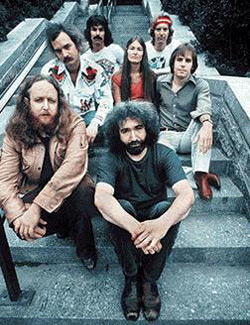
Grateful Dead in 1977 This is it, the best Grateful Dead song ever – ask anyone, it’s true! Well, maybe not everybody agrees (quibbling and trifling sometimes may appear to the true hallmarks of Deadheads the world over) but this show, recorded live at Cornell University’s Barton Hall on the 8th day of May, 1977 is widely considered be one of the band’s greatest achievements. In fact, the show was so good that 30 years later the mayor of Ithaca declared May 8th to be Grateful Dead Day (which is not too dissimilar to a mayor declaring a pizza to be awesome).

I didn’t initially intend to write a bunch about this, it’s not like any more internet ink needs to be devoted to these particular 25 minutes of bootleg Grateful Dead history (believe it or not, this legendary show has never been released commercially, this sound-board tape has been going around for decades, but this performance will not, for legal reasons ((I think?)), appear on any From the Vault or Dicks Picks collection), and besides what can I really say…

Actually… I can’t help myself, I’ve got tons to say! And besides, I’m about to turn 30, there’s no better time to affect the point of view of an effusive 19-year-old hooked to mixed metaphors – but you don’t have to take my word for it, not only are there are scholars out there proffering far more enlightened assessments than my own, you can click here to listen for yourself (make sure your iPod has some space, it is 25 minutes long, after all). As far as live Dead sets go, it’s pretty accessible – this is the fun side of the Dead, both of theses songs create a kind of vacationy atmosphere, like the ultimate Hawaiian shirt Friday – and I’m sure you’ve heard both of these songs independently; Scarlet Begonias gets more air time than Fire on the Mountain, for sure, but (at least when I was a kid listening to WHCN) classic rock DJs are occasionally kind to these songs (mainly when they can’t find their copy of Skeletons from the Closet).

An extremely celebratory Scarlet Begonias starts with a bang, and the sky turns yellow; the sun: blue. Donna Jean adds some stylized wailing into the mix after the final chorus winds down and at around five and a half minutes the transition begins. To my ears, this particular journey isn’t accomplished so much by seamlessly transporting the audience from one psychedelic shore to another via some inter-dimensional slip stream (standard practice, pretty much), but by forceful keyboard playing on the part of the late, great Keith Godchaux (despite the fact that the shows played this season are universally acknowledged as the Dead’s finest hour, Keith and Donna Jean were out of the band by 1979 – and within a matter of months after that Keith passed away in a tragic car accident). The movement has clear beginning and end points, moments so crisply delineated that it becomes quite clear that there’s a definite destination – and Keith (for one) is in a hurry to get there.

The playing is anything but subtle (while metaphorical scalpels are invoked regularly throughout the band’s long live career as transitionalists, there are just as many occasions where hatchets are pulled down from their hooks and wielded with great ferocity), Keith marches the band along (much like he motivated the latter portion of Jack Straw earlier in the evening), which lends the lead guitarist’s inquisitive playing a preoccupied tone: even as Garcia shines his mind-light into the cosmic caverns the band hurtles past, stuttering on the precipice of exotic sojourns, the anxious pounding at the piano reminds him there are places to go, people to see, and so the passages he plays drop hints of potential trips and foreshadow the mind-blowing things to come. Even Weir, consummate colorist, seems to be chomping at the bit, then the break happens; the destination is reached right about at the halfway mark.

Familiarity is restored and Phil and the drummers slide right into place and establish a rhythmic structure strong enough to sustain the explosive launches that are coming shortly – though not too shortly, now that the band has gotten where they’re going, they can stretch their legs a bit before the real heavy lifting begins. As the signature wah wah key notes emerge from beneath emerald waves, the song takes on a bit of a submarine quality, sound waves flutter through a flooded dreamworld, watery notes reverberate off of walls of light.

As the old psychedelic warlock finishes up the story of a disaffected, lazy messenger service employee and an impotent dragon (complete with a big sing-along chorus) and begins his first guitar solo, he’s transformed into a kind of benign aural-astral educator, outlining some initial principles then wading waist deep into heavier concepts before recalling (having nearly forgotten) that there’s still another verse to sing. The crowd responds accordingly, now that they have a firm idea of what’s in store. Donna Jean throws some of her trademark hard/soft vocal stylings in and before you know it the second solo has begun.

Garcia picks up pretty much where he left off, assuming that the groundwork he just set down is still fresh in your mind and, at about 20 minutes into the piece, the mind-blowing passages begin. Everything he’d been so diligently setting up for the last however many minutes falls into place and suddenly he’s painting with solar flares?– locating the fiery mountain high in the heavens. This kind of guitar playing is typically referred to as spiral latticework, which is an incredibly accurate description. Sound helixes wind and wrap around each other, climbing ever higher into far off starscapes.

After the blaze, a reasonable holding pattern is established before Garcia launches into the stratosphere a final time, straining to reach the top of it all, the highest peak imaginable, when suddenly the explosive apex is attained and, in Icarian fashion, everything comes crashing down. Foundations shake, crystal palaces shatter and the jolting ride back down to earth comes too fast and too furiously. The band synchs up for a succinct sign off and before you even know what hit you, they’re tuning up for Estimated Prophet.

See more: Songs


One Comment →
Posted on December 8, 2008

Books »Dhalgren

dhalgren samuel r delanyA book that’s really like no other I’ve read, Samuel R. Delany‘s Dhalgren is technically a Sci Fi novel –but I think that’s super misleading. While it’s true that traditional SF elements abound (multiple moons, plague journals, cool multi-bladed hand weapons, gangs clad in mirrored chains roaming the streets enclosed in holographic dragon shields), would anybody ever strictly classify Naked Lunch as SF?

An amnesiac meets a woman in the woods and they have sex right away. She leads him into a cave where he discovers a chain of prisms and mirrors which he wraps around his body. The woman runs off and the amnesiac chases her, losing one of his sandals somewhere along the way. He picks up her trail in a field where he catches her just as she turns into a tree. He hits the road and is picked up by a trucker who gives him a lift to the edge of the city. A lot happens over the nearly 900 pages that follow. The amnesiac enters the city of Bellona, which is somewhere near Texas or Oklahoma, it’s not quite clear; something has happened to the city, either a man-made or natural disaster (it’s never explained), but there’s no phone service, no radio or television waves can pass in or out, the national guard has left and the residents have been evacuated – most of the residents that is, a number of folks remain, and there are frequent visitors.

Who would choose to live in a lawless city? Hippies, gay bikers, delusional yuppies, drag queens, poets, disaffected teens, drug users, AWOL sailors, psychologists, would-be publishing magnates, ministers, department store owners, astronauts and poor African Americans, these are the characters that the amnesiac –who becomes known as “The Kid”, Kidd or “Kid” encounters.

But I want to make it clear that Dhalgren isn’t a really tale of post apocalyptic survival, not like Mad Max or even A Boy and His Dog are, and even though there are gangs and there’s violence and there’s rape and there’s massive suns threatening to envelope the earth and lightning fields and earthquakes, there’s mainly page after page of literary acrobatics and conceptual language work that constantly lurches between the pretentiously inaccessible and the really dirty. In fact, this is the most sexual book I’ve ever read. Not only are the sex scenes graphic (to say the least), Delany is acutely interested in sexual psychology and much of the book deals with exactly why some residents and churches are decorated with massive posters of a naked black guy named George (the posters feature his fully erect penis), a man made famous in Bellona when photos of him raping a white girl hit the cover of the local newspaper – but even that little detail is loaded and not reflective of the myriad of complexities Delany works into the book.

Even more than sex, the book is about writing, it examines art criticism and art making with the intellectual rigor that David Foster Wallace (having never read Gravity’s Rainbow, Infinite Jest is the closest thing I can compare Dhalgren to, they share major ambition and SF elements –but the comparison is a bit misleading) applied to ball-hitting theory; Delany crafts pages and pages around Kid’s writing process, as Kid goes from erasing his way through early drafts to proofing galleys. A visiting celebrity poet, a pain in the ass semi-successful poet and a newspaper man all play key roles in Kid’s conception of art which, because he is a 30 year old amnesiac who seems to have spent time in mental institutions, is pretty much zilch when the book begins.

And it’s reflexive: buildings that have been burning for days are suddenly restored, street signs are suspiciously inconsistent, then deep, deep into the novel Kid discovers a warehouse full of the very props that have made the city what it is; it’s truly confounding. You’ve got to get to a point where you stop even looking for the kind of context clues that inform the plots of regular books. It doesn’t even matter what’s going on, plot-wise, because not only do events unfold in an inconsistent, semi chronological order, the final portion of the book is printed in a particularly infuriating format: the pages are split vertically in an attempt to recreate Kid’s fragmented notebook – when he discovers the spiral bound notebook in the park early on in the book, it’s already about 40% full, Kid pens the poems that are anthologized in Brass Orchids on the flip side of the pre-written pages, then squeezes journal entries into the margins, in between poems and around preexisting lists and such. This final section is introduced in a way that implies that the notebook had been converted into a manuscript which was later discovered by scholars and published with an almost academic introduction – but that’s misleading, it hints at some kind of a familiar structure (like Lem’s Memoirs Found in a Bathtub) but it’s important to note that even though the “discovery” of the notebook is inferred, no real narrative satisfaction can be gained from this device.

This is literally the diametric opposite of seminal SF works like Dune, plot and story take a secondary role to the incredibly engrossing and occasionally infuriating character development. Kid meets so many people, and interacts with them in such profound ways that even though I’ve probably (unintentionally) described this as more of a chore than a pleasure read, the four or so months that this will take you to work through it are well worth it. This is a thoroughly unforgettable book – and big thanks to Sarafina for tipping Brittany off to it.

See more: Books


Be the first to leave a comment →
Posted on December 8, 2008