Movies »Gold Diggers of 1933

gold diggers of 1933Gold Diggers of 1933 is a classic musical with a goofy, fun charm anchored by several lavish Busby Berkeley numbers and a lively story. The film opens on Gingers Rogers's beaming face as she sings “We're in the Money” with a trail chorus of girls in tiny coin costumes tap dancing behind her. The irony (we quickly discover when rehearsal gets shut down by the coppers) is that no one is really in the money at all – it's the Depression, darling, and Barney, the show's producer, hasn't paid his bills.

This leaves our four little actresses: innocent Polly (Ruby Keeler), sultry Fay (Rogers), sassy Carol (Joan Blondell), and the magnificently named Trixie Lorraine (Aline MacMahon) who's wise and funny (she remarks a portly dance partner: “Why, you're as light as a?heifer,”) out of work until Barney can come up with the money for a new show. Enter Dick Powell as Brad Roberts, the seemingly hard up neighbor and songwriter who comes to their rescue. But how? Did he rob a bank to impress his sweetheart, Polly? Or is there some other secret he's been hiding?

We find out soon enough (though I won't spoil it for you here), but the story roller-coasters through mistaken identity, star crossed love affairs, and more than one topsy turvy romance. Chorus girls and high society men mix even though the upper class considers our heroines to be “parasites”, “chiselers”, and “gold diggers”. While much of the story, despite its considerable age, is still relatable and surprisingly fresh, humorously enough the one bit of life that's changed the most is high society's aversion to fame and entertainment. Nowadays the rich can't wait to be splashed all over TV and date celebrities.

Also, even in a Depression, the clothing is spectacular here – even a “bad dress” sports amazing sleeve details and tailoring, while more fun frocks (particularly worn by the statuesque Blondell) are wild and stunning. In one scene two of the girls, in a ruse to fool a couple of Boston high society men, insist on new adorable hats and refuse to leave the apartment with out corsages – corsages, I might add that sit prettily atop fur stoles at lavish night clubs.

The cast is wonderful and I was particularly taken with Warren William's leading man snob (see this week's hunk), but the musical numbers are the real show stealers. The first, “Petting in the Park” features: kissing monkeys, dapper singing cops, roller-skating girls, a freaky man-baby on roller-skates, an on-stage blizzard and rainstorms, a strip tease in silhouette, innumerable garter belts, and bathing suits made of tin!

Another number “The Shadow Waltz” is kind of a boring song, but it's saved by discus skirts and neon violins! The final number, “Remember My Forgotten Man” is the best song and Joan Blondell's spoken word lament reminds us of the actual pains the Depression brought so many.

This popular film spawned three sequels that I haven't seen yet.

See more: Movies


Be the first to leave a comment →
Posted on December 15, 2008

Movies »Demonlover

demonloverNo one does corporate espionage quite like Olivier Assayas. We watched Boarding Gate a little while ago and at one point I had to pause the DVD and ask aloud, “If you could make a movie about anything you wanted, why would you choose this story?” Brittany didn’t know for sure, but what really prompts my question isn’t so much a distaste for office intrigue – which is a perfectly valid genre to work in – but the way the writer/director goes about putting these movies together. There’s something really mind-blowing about how Assayas not only over-thinks the story, but how he consistently gets the kind of banal details that many filmmakers live or die by totally wrong, then, in the next scene, spends far too much time on what feels like the actual conversations these working professionals would really have with their colleagues – conversations that other filmmakers (the same filmmakers so anxious to portray banal everyday-osity) would find far too technical and specific and would feel obligated to water down with more universal factors in an effort to restore audience relate-ability.

It happens all the time in Boarding Gate: time and again the actual work that Michael Madsen’s character does (which is central to the story) is vaguely explained; apparently it’s financial – tied to the international markets – and he made some bad discussions a while back. This seemingly deliberate lack of specificity forces me to wonder, has Assayas ever had a real job? Has he ever worked in an office? Why, if this character’s job is so important to his movie, did he choose to do no actual research and leave the details out, which tends to be fairly common practice on the stage – where common knowledge dictates that those kind of details only hold a play back – but are routinely included in films – where realism tends to trump the black backdrop stylization of the modern theater? But then, towards the end of the film, Kim Gordon appears on the scene (Sonic Youth created the music for Demonlover, which I promise I’ll get to shortly), and gives the always phenomenal Asia Argento this incredibly detailed and (according to Brittany, who works in the industry in question) incredibly accurate description of the garment production work she oversees in Hong Kong.

That’s the contrast that makes these films so interesting: the purposeful omission of details (in an almost studenty way) that would ground the story in a semi-realistic world clashes with instances where the realism become un-filmic – which sets Assayas up to do what he does best, work with structure. And that’s really what sets Demonlover apart from Boarding Gate, it’s much a more successful and intriguing film because the narrative unravels in such a complex and disturbing way.

Here’s a quick synopsis: Diane (the steely Connie Nielsen), a corporate saboteur secretly employed by an Anime distribution outfit called Mangatronics to ensure that the takeover of the Japanese production studio TokyoAnime by the powerful VolfGroup corporation does not divert Mangatronics’s current market share to its rival, the American distribution company Demonlover. The resourceful Diane quickly dispatches her superior at Volf, a woman named Karen (Dominique Reymond) who just bought a jet black Audi TT, and takes over the details of the takeover. Diane and fellow Volf account exec Herve (Charles Berling) head to Japan to finalize the deal, which, the audience is told, is barely legal (who knows why). After a long working lunch discussing the legality of characters without pubic hair, Diane and Herve are taken over to the Anime-Tokyo studio, where they are turned on to the state of the art work that TokyoAnime is making (3-D animation not quite on par with the intro to Diablo II) as well as the existing product line (our DVD is censored, and the cartoon penetration is pixelated, but apparently there’s a 2-disc directors cut out there, somewhere).

Back in Paris, events take a quick turn when Gina Gershon, an executive at Demonlover, is picked up at the airport by Karen’s former assistant Elise (the lovely Chloe Sevigny, playing a character who’s always sticking her baby-sitter with overtime). Diane makes a number of moves to block Volf from signing a deal with Demonlover that would put Mangatronics out of business while CEO Volf himself (in Paris for only 16 hours) questions the Demonlover top brass about their involvement with an interactive torture site called Hellfire Club. Desperate to thwart the Demonlover contract, Diane dresses up in the kind of tight clothes required for willowy B&E and things start to go off the rails as the consequences of Diane’s actions – and some surprising office allegiances – are revealed.

The Hellfire Club site factors prominently into the latter half of the film and much screen time is devoted to Flash-heavy site intros. I know, it’s a bit hard not to smirk at the 21st century-osity of it all, but that’s okay – even though Foster Wallace didn’t exactly nail impending technological developments, Infinite Jest certainly doesn’t suffer. As the primary themes Assayas is working with become apparent early on: desensitization to sex and violence in these modern times, how even underground pornography – which seems so independent – is now a corporate commodity, how amorality and corruption seep upward into the highest strata of corporate enterprise with the acquisition of a vice-based product line; so do the techniques: the film is shot predominantly in shakey, hand held close ups of characters that are always smoking, classic film noir tropes are employed throughout, not only are there double crosses aplenty but, as one reviewer pointed out, Diane is knocked out more times than Sam Spade and Philip Marlowe combined. Darker themes emerge in the second half regarding the repulsion/allure of sadomasochism and voyeurism and the surrender of sexual control.

But it’s not the contemporary themes and the use of film styles that make this movie so dynamic, it’s Assayas’s use of his own technique: the inversion of these relatively commonplace elements by focusing the audience’s awareness on the surface level, requisite plot, which at time feels so paper-thin that there are moments where the lack of any kind of realism is actually distracting (at one point Diane is trying to reach Volf by phone but he’s unavailable, “tied up with that real estate thing again”; the first floor of the Volf corporate headquarters is a stock boiler room full of young men with telephones in each hand yelling, “Buy” and, “Sell” arbitrarily, while the second floor is reserved for too sexy executives working diligently on contracts for web sites like sexslavelaracroft.com; there’s a scene where a DJ is playing with faders on a mixing board like an over-enthuisiastic extra without any knowledge of the impact that such toying would have on the floor of a Japanese club), which forces audiences to recognize the plot is purely superficial – then Assayas hits back with a scene like the long lunch meeting (a scene that’s too realistic), and the resulting reality discord is an ideal set up for the way that the plot breaks down, not so much in a typical surrealist fashion (comparisons have been made –negatively – to Lost Highway and – positively – to Videodrome), but more along the lines of Blow Up or Glamorama, where the plot folds in on itself and all the topical content falls away to reveal something much darker and unsettling than could ever be reached through the straight addition of its parts – like Easton Ellis and Antonioni, Assayas practices a bizarre form of narrative mathematics; like Lynch and Cronenberg, he wields technological dread and sexual anxiety to create the atmosphere of a nightmare that’s gone on too long.

I don’t want to spoil the surprise so please, check it out for yourself. While I can’t promise you’ll like it (it was booed when it premiered at Cannes), you’re not likely to see anything else quite like it.

See more: Movies


Be the first to leave a comment →
Posted on December 8, 2008

Movies »Classe Tous Risques

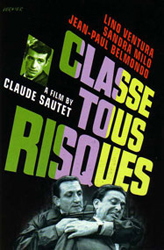
classe tous risquesClasse Tous Risques translates to “The Big Risk” and it begins with just that as two crooks, one awesomely slicked back and tooth-picked and one you might recognize from other noirs of the French New Wave played by actor Lino Ventura, commit a brazen daylight robbery. The risk is necessary because Abel (Ventura) is a desperate man who has been on lam for years in need of some money to get out of Italy as the local police close in.?The escape is made even more difficult and grave as he's traveling with his wife and two adorable young boys who are always performing doe eyed acts of cuteness like eating sugar from their hands and falling asleep in get away cars.

Fortunately for Abel he's done enough no gooders good to call in a few favors but most of his friends seem to have pretty short memories and instead of helping the guy out himself, they find a reliable stranger. Enter Jean Paul Belmondo and where Belmondo goes, the dames follow. Here, again he reminds me of what a doll he was. If quirky French men with oodles of charm are your thing, that you owe yourself a marathon of his films.

This stark, almost quiet noir is a great one to include. It's a sometimes sad, sometimes violent chapter in the french new wave about loyalty, betrayal, and revenge. It shows the reality that a life on the run is a fairly terrible thing that can bring down the toughest and best of men. It portrays the last hurrah of a lifetime criminal at the end of the road, and while the bodies pile up and he's certainly not afraid to use a gun it ends not with a bang but a whimper.

Classe Tous Risques was released on Criterion as well as other Rialto Pictures of the french noir genre like Les Deuxieme Souffle which I also watched this week but found to be over long and disappointing despite a great night club featuring bee hived and long legged lovelies doing a synchronized smoking act.

See more: Movies


Be the first to leave a comment →
Posted on December 1, 2008

Movies »Lives of Others

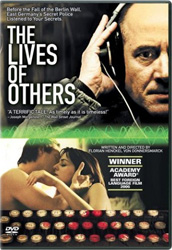
the lives of othersThe Lives of Others was as highly praised a movie to come out of 2007. All my friends and family loved it and with that kind of build up I half expected to be a little disappointed – but director Florian Maria Georg Christian Graf Henckel von Donnersmarck, helming his first feature film, does not fail to impress.

Set in 1984 in East Germany, the plot involves the surveillance of a playwright and his actress girlfriend by the Stasi, the country's feared secret police. It's an interesting time in recent history, especially for those of us that grew up as kids knowing vaguely about the wall that stood between East and West Germany, but never having had any real knowledge or understanding of what it might have been like to live there.

This totalitarian environment that runs on fear and eventually breaks down all love and and trust between its citizens is heart breaking. This is not a movie that makes you cry, but one that you feel broken apart by the unfairness of the world. It's hard to imagine (though perhaps less so in the age of the Patriot Act) what you would do under such circumstances, how far you would push against the powerful to think freely and save the people you care about.

The acting here is superb and understated, particularly by the late Ulrich M?he who plays a Stasi agent who undergoes an unexpected change of heart. Curiously, M?he claims his own life mirrors that of one of the films' characters; he thought that his own wife of several years had been informing on him to the Stasi – and while she won a lawsuit preventing him from making that allegation in print, records show he may have been right.

Sebastian Koch, who reminds me very much of Jeroen Krabb? from the Fourth Man, and the stunning Martina Gedeck are also fabulous here. The cinematography manages to be rich while working in a monochromatic range with occassional pops of burnt warm tones. It's a film well deserving of its many awards and great acclaim – but it's not melodramatic or flashy, only steady, sophisticated and haunting.

See more: Movies


Be the first to leave a comment →
Posted on November 24, 2008

Movies »Down by Law

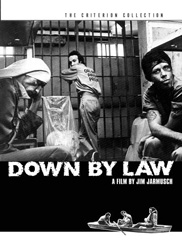
down by lawIt's been a Jim Jarmuschy week for me; not only did I see him on the street talking on his cell phone, hoping we wouldn't bother him, but I've been digging back into his early black and white work with Stranger Than Paradise and Down By Law. Both deal with similar themes: miscommunication, a stranger in a strange land, people forced together who would normally interact… and while Jim (my husband) is a bigger fan of Stranger (which is highly recommendable), I've always loved Down By Law the most.

The film's opening shots of early morning New Orleans streets, photographed beautifully by his long time DP Robby Muller, set against Tom Waits's Jockey Full of Bourbon is timeless and evocative. Someone on The Sopranos team was clearly inspired by it when they pit together their own title sequence. Jarmusch is an influential guy. Watching his independent movies (independent in the way that used to mean something pretty great) awakens creative ambitions.

He's also just so cool, surrounded by cool people. Tom Waits is lean and all drunken charm as a misunderstood radio DJ railing against the world. Dreamy John Lurie is smooth and smirky as a pimp with big dreams. Even Roberto Benigni joins the cool crowd in Jarmusch's movies, his adorable and energetic performance almost compensates for the tedious clowning the star of Pinocchio would later become known for.

While watching the movie I could vividly imagine Lurie kicked back in suspenders watching the Academy Awards smiling and muttering “Jesus, Roberto” then laughing into his saxophone. Rounding out the hip cast are Ellen Barkin, looking as good as she ever has in a black slip, dripping mascara; and the infamous, possible “real” killer of Nancy Spungeon, Rockets Redglare.

Down By Law, like all of Jarmusch's films (which, I might add, are all worth a look), is slow and thoughtful — but it's also quite funny, with a lot of the laughs coming from Begnini's character, Roberto (“I scream, you scream, we all scream for ice cream!“); and the chemistry between these three dynamic actors is a delight to watch.

See more: Movies


Be the first to leave a comment →
Posted on November 17, 2008

Movies »The Love Guru and Southland Tales (Worst Movies)

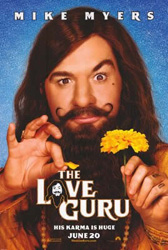
the love guru mike myersI was fairly fortunate this year and didn't end up seeing a whole lot of bad movies. Sure, Sunshine was terrible and baffling, I really don't even want to talk about Mother of Tears, Factory Girl was viewed almost entirely in fast forward and The Happening still has a very long wait on Netflix, so I have nothing yet to report on that front yet, but only two films really deserve to be on this list and I struggled mightily to determine which one would win the dubious title of Worst Movie of the Year.

On one hand there's Richard Kelly's follow-up to the surprisingly fresh instant indie classic Donnie Darko. It was a major disappointment, achingly self-indulgent and overblown. Thinking his work to be so important and worth you time Kelly explained, “Southland Tales was initially planned to be a nine-part 'interactive experience', with the first six parts published in six 100-page graphic novels that would be released in a six-month period up to the film's release.”

It's a mess and a it's shame and it's a total waste of an excellent cast: Buffy, Stiffler, The Rock, Timberlake, and the little old lady from Poltergeist?! Well done, Kelly! But then again, you also indulged Kevin Smith with a long and excruciating cameo. At the same time, there are moments when you really want to give it a fair shake, when you end up making excuses and thinking to yourself, “You know, if this were a completely different movie?quot;

But what's the greater evil, a painful, ego driven journey that aims too high, fails horribly and makes no sense OR a painful, ego driven journey (though not as long) with two booger jokes within the first fifteen minutes?

Perhaps the inclusion of The Love Guru is a bit unfair. Of course it's terrible, the only reason we watched it was to research Jim's ingenious Halloweeen costume. And while we had no intention of actually enjoying it, we were both truly stunned by how far it sank below even our lowest expectations. To put it lightly, it filled me with loathing. Ugh, Depends Adult Undergarment jokes? Really Myers, you sir are no David Foster Wallace! Oh, and why not throw in several exhaustingly boring hockey scenes inbetween piss and dick jokes? In case you were unaware, this movie is about the Toronto Maple Leafs winning the Stanley Cup. Thanks, Mike!

Myers says he's been wanting to do “this kind of work” since he was eight, a statement that makes a lot of sense since “this work” could only be appropriate and entertaining to a very unsophisticated eight year old. Urkle showed more wit. In another interview Myers immodestly claims he's 'Trojan horse-ing the wisdom of the east' – most evident, in my opinion, in the scene where Mini Me Verne Troyer declares, “If I sit here any longer I'll pop my dick bag”, and the scene where a hockey player gets his mojo back and regains his self respect by watching two elephants fuck on the ice.

To call this movie a piece of shit, something the Love Guru himself refers to (in a scene where he wonders aloud if he's crapped his pants) as “monkey monsters”, is an understatement. There are creepy scenes where the full grown head of Mike Meyers is super-imposed on the body of a child; a shot where he literally gets his head stuffed up his ass; and while there's no Kevin Smith cameo (small graces), Fergie's there if you want her – and I know you don't.

The biggest loser in all this, aside from audiences (who awarded Southland Tales with a measly $275,380 at domestic box offices and only another $81,028 world-wide; The Love Guru officially took home certified “bomb” status) is Justin Timberlake, who stars in both. Maybe next time he's a dick to a fan of his music that fan can bring these performances up. But these two films don't just share Timberlake, they both received some really harsh and hilarious words from critics:

Southland Tales:
I hope Kelly's career survives Southland Tales, unless, that is, he plans to make more movies like this.”;
When it's not being obstinately stupid, Southland Tales is just difficult to watch.”;
No amount of reworking could salvage what was a misbegotten and unfunny idea to begin with.”;
One of the most confusing, ridiculous, pretentious and disastrous cinematic train wrecks I've ever seen.”;
The actors barely comprehend their lines. The pop-culture references are lame. Nearly every moment falls flat. And it's boring.”

The Love Guru:
Dismal, laugh-free comedy that's actually painful to sit through“;
The puerile levels to which it sinks make even Goldmember, the crudest of the Austin Powers movies, look like Brief Encounter.”;
When not finding new names for willies, Myers – who also wrote the script – devotes the rest of the time to pitiful one-liners revolving around farting, snot and diarrhoea.”;
No child under 12 should have to undergo it. The same, mind you, goes for anyone over 12.”;
A film so numbingly unamusing that you seriously question whether you were mistaken to have ever found Myers funny.”;
The Love Guru is insulting to anyone with a healthy sense of humor and the simple desire to laugh.”
Even porn girls don't like it.

See more: Movies


Be the first to leave a comment →
Posted on November 10, 2008

Movies »Spirit of the Beehive (Best Movie)

spirit of the beehiveMovies category pick for the week of 3/24/08
Here's what I said then:

The Spirit of the Beehive, the beloved debut 1973 film by Victor Erice, stars Ana Torrent and Isabel Telleria as two unspeakably adorable doe eyed young sisters in a remote Castillian village. It is a highly praised film, though it's fame and recognition is not as widespread as other comparable masterpieces. It was released on Criterion a few years ago, so hopefully new audiences will emerge.

The story is simple and secondary to the imagery and emotions conjured. It is, in fact a nearly silent film with the scenes of the adults being particularly quiet and elusive. The world the sisters, their mother, and grandfather inhabit is a remote and bleak one, but through the imaginative eyes of the children, it becomes fantastic; through the eyes of the (going blind) cinematographer, Luis Cuadrado it is magical, exquisite, gorgeous! – likely one of the most stunning films you are likely to ever see.

Before you are mislead that this is a cutesy coming of age story of two little girls in a picturesque town, though, it is important to note this film is as painful as it is beautiful. Ana and Isabel's making sense of a brutal and unfair world, particularly their understanding of death, is not sentimental or movie like. It is at once ethereal and full of dread.

It is largely considered the best Spanish film ever made and I would go so far as to say it is also one of the best films made from a child's point of view. It is slow moving, but never boring, and worth the effort. This movie will amaze you.

Runner Ups:
Let's Scare Jessica To Death
A Few Dollars More
Gosford Park
The King of Kong: A Fistful of Quarters
Badlands
No Country For Old Men

See more: Movies


Be the first to leave a comment →
Posted on November 3, 2008

Movies »The Last House on the Left

last house on the leftThe problem with The Last House on the Left, despite it being loosely based on the Ingmar Bergman film The Virgin Spring (a fact you can throw around if you feel guilty and need to defend this movie in a conversation), is that it's perhaps too successful in its exploitative intentions. It pushed the envelope of taste to the extreme, particularly for its time, and even today in the age of prime time autopsies and torture-based box office hits, it's the crudest and rudest rape/murder/revenge exploitation movie I've seen. The legend, which is oft told in DVD featurettes, is that it had kids vomiting in their seats when it was in theaters.

Sean Cunningham, who went on (with more than a little influence from Mario Bava's Bay of Blood) to define the slasher genre with Friday the 13th franchise, and Wes Craven, who fairly recently redefined that genre by populating a film with characters well versed in classic horror movie tropes and created the extremely imaginative Nightmare on Elm Street series (probably the most influential thing to me as a kid, and what made me want to grow up to make horror movies) met each other and made this film long before they really knew what they were doing. And it shows.

The tone of the movie is part Lassie, mixed with low budget porn, and there's definitly a health class movie vibe. The DVD transfer is about as good as the wobbly VHS I first saw eight years ago, but then again, a crisp picture and high fidelity audio don't always do a horror movie good. In my some of my favorites, like Martin and Let's Scare Jessica to Death, a sort of amaturish grit and soiled realism only make them more eerie; Last House on the Left benefits from its unskilled hand. When the murderers are sitting around their grimy apartment, you can almost feel the stains and smells. It is indeed the last place two “teens” (the actresses are clearly a good ten years older than their characters, which makes one scene where Mari talks excitedly about how her boobs have filled out since last summer especially odd) would want to be stuck.

The film is all about juxtaposition (another word you can use if someone accuses you of being a total asshole for liking this movie). The music, which seems to have been done by a severe schizophrenic, is goofy and Beverly Hillybillies-esque and feels terribly off on top of a scene where the killers have two young girls in the trunk of their car. When things get violent–and they do, for a long, drawn out squirm-inducing time–scenes of brutality (with I might add include blood that looks too real) are contrasted with hunky dory scenes of Mari's parents making a birthday cake and the local bumbling cops farting around.

After the killers have finished with the girls, in a wicked twist of fate they end up having to stop for the night at Mari's parents house; the revenge portion of the film commences and you get the feeling that they were once contestants on Double Dare with the elaborate shaving cream and electrocution set-ups they stage to enact their vengeance. At the same time, when it's their turn to commit violence, violence that the audience will surely crave after watching the previous two thirds of the film, I feel the parents get short changed and the movie ends without complete satisfaction.

I'm not going to lie, the violence is very snuff-like. It's not fun and mindless like most slasher movies tend to be, a complaint which is itself an odd thing: why is it worse for on-screen violence to be shocking and sickening? Is it better than making murder into an entertainment that no longer phases us? I guess that's an argument that could go on and on, but the truth is that I doubt Craven and Cunningham were really considering either side of it. They created, for better or worse, a highly effective exploitation film that is just too good at being bad.

See more: Movies


Be the first to leave a comment →
Posted on October 27, 2008

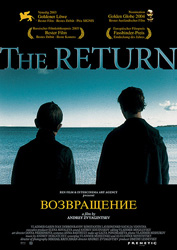
Movies »The Return

the return russian film
The Return (not to be confused with the 2006 paranormal thriller that Buffy stars in) begins with a series of early Polanksi-esque shots that filled me with dread. Maybe it was just because the scenario on screen tapped into my own fear–like the young boy in the movie, I too would never want to jump from a high tower into the sea. It's a great set up to a tense and brooding film filled with both spoken and unspoken distress and uneasiness.

Two young boys meet there long-absent dad when he suddenly returns after a twelve year absence; it's not clear where he's been or what he's been doing, but he offers to take the kids on a fishing trip that quickly devolves into a miserable adventure. A mean dad suddenly bossing them around, leaving them by the side of the road in pouring rain to teach them a lesson, pointing out their deficiencies as men at every turn, it's no wonder that I sided pretty squarely with Ivan, the younger, stubborn and angry kid who thinks his dad is pretty terrible.

But beyond dad issues and the delicate balances of siblings relationships, the story has a more ominous quality, an element of suspense raised by many unanswered questions. Just what is their father up to? Who is he calling on the phone? Why is he taking them where he does? On top of the already extremely uneasy familial situation, the film comes alive with these additional mysteries.

The cinematography is striking, often monochromatic to the point of almost looking black and white (this KINO trailer is narrated in English, but you'll still get a good sense of the film). The shots are all very artfully composed and frequently long, reminding me often of Knife in the Water. This is director Andrey Zvyagintsev's first feature length film after a career in commercials; it won several awards including the Golden Lion at the Venice Film Festival and the Fassbinder Award at the European Film Awards.

On an extremely tragic note, one of the young actors drowned right before the film premiered.

See more: Movies


Be the first to leave a comment →
Posted on October 20, 2008

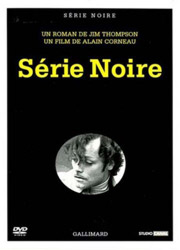
Movies »Serie Noire

serie noire filmJim Thompson's Hell of a Woman is a classic favorite of mine; it's a dark, hard boiled masterpiece that deserves a great adaptation like other Thompson books have received (The Grifters; Coup de Torchon, the Pop. 1280 adaption; and After Dark My Sweet), and a great adaptation it got in Alain Corneau's Serie Noir.

I had no idea this film (here's the awesome French trailer) even existed until Film Forum's recent French Crime Wave series. Unfortunately, their double feature ticket policy (which they stand by as a matter of tradition) makes it really hard for people with jobs to attend, so I missed the single showing.

Fortunately, Brix Pick Five Minutes to Live, the ultimate resource for hard to find DVDs, sells an admittedly shoddy transfer in their Rare Film Noir section. Let's hope, for your sake, that it doesn't stay rare for long. I'm hoping that with the attention from the Film Forum presentation this dark and funny film will end up getting the full Criterion treatment (in fact, I just sent them an email with the suggestion).

It's an odd film that really captures the desperate and pessimistic but humourous tone of Thompson's novel. The settings are bleak and feel realistically lived in, the characters are neurotic at best and there's no music on the soundtrack aside from for the pop songs the protagonist, Frank Poupart (“Puppy” to his friends) dances and daydreams to.

Puppy is a door to door salesman and while he's not entirely without his charm (he really reminds me of Howard Moon–right down to the flop of greasy hair, thin moustache, and turtleneck) he's still a sad sack. He's a man with the worst intentions, but he's too weak to carry out the bad deeds he's hatched. Instead, he tells unconvincing lies to himself and everyone around him as he slips deeper and deeper into a mess of violence and theft.

Encouraged by an almost comatose apathetic teenage girl (who's been sold into prostitution by her aunt) to commit murder for money, Puppy almost stumbles blindly into the plot. His lazy and messy wife Janice has left him (but not before shredding all his clothes to pieces), his sticky fingers at work have landed him in and out of jail, and he just wants a break, man!

Patrick Deweare's riveting performance, which seems unaffectedly improvised, is stellar. He plays this incompetent loser with complexity and compassion; as a funny, dangerous fantasist, a pitiable pathological liar and sociopath who is mesmerizing to watch. The role was reportedly such a drain on the handsome and troubled Deweare that people claim it contributed to his mental decline. He committed suicide at 35, cutting short a promising and extraordinary career.

If you like your noir bleak and your comedy dead black, it's definitely worth your time to track down this film or, if you're optimistic enough to hope for an eventual proper DVD release, you can sate your appetite by reading the equally phenomenal book.

See more: Movies


Be the first to leave a comment →
Posted on October 13, 2008