Movies »Dr No

dr. no
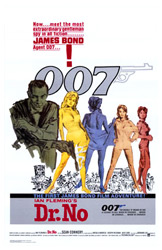
Dr. No, the first in a long line (22 official films so far) of James Bond screen adaptations is sill my very favorite. I used to watch the Bond movies all the time with my dad and still fondly recall the magic of this one from the first scene of the totally cool Jamaican assassins called the Three Blind Mice to the final make out shots on the boat Bond's purposefully set adrift. It's got Sean Connery (still the best Bond), Ursula Andress as Honey Ryder emerging from the ocean like a vision (still the best Bond girl), and it's got a great underwater evil lair belonging to a villain with metal hands! Set in beautiful Jamaica, it makes for nice afternoon viewing while dreaming of warmer climates.

James Bond, who still manages to capture imaginations and inspire film adaptations was created by Ian Fleming in 1953, though the character lived on in additional novels after Fleming's death in 1964 thanks to various authors. According to Wikipedia, Bond is believed to be:

A romanticized version of Ian Fleming, himself a jet-setting womanizer. Both Fleming and Bond attended the same schools, preferred the same foods (scrambled eggs, and coffee), maintained the same habits (drinking, smoking, wearing short-sleeve shirts), shared the same notions of the perfect woman in looks and style, and had similar naval career paths (both rising to the rank of naval Commander).

Fortunately even as the franchise producers continue to turn out Bond movies, no one seems interested (yet) in remaking the old films, so Dr. No should remain in its Technicolor, womanizing glory for awhile. It's available on Blu Ray, which is really making Jim and I consider buying a player as they are rapidly going down in price.

See more: Movies


Be the first to leave a comment →
Posted on February 23, 2009

Movies »Honeymoon Killers

honeymoon killersWhy do I mention it now?

The spectacular and spectacularly underrated and seen Honeymoon Killers was recently screened one night only at the Film Society at Lincoln Center last month. For those many of us that missed it, I thought it was a great time to re-recommend a rental.

Here's what I said back on 5/21/07:

Movies like this one are the reasons Criterion Collection is so fabulous: here's a b-grade exploitation film that turned out light years better than it needed to be with excellent performances (Shirley Stoler where are you?… what? Pee Wee's Playhouse?); sophisticated filmmaking despite a small budget; and a cutting edge plot featuring serial killers as protagonists.

This movie can't get out from under the weight of its low budget completely and it seems almost like an industrial film at times–to its advantage–and even Criterion couldn't do much of anything with the terrible audio, I recommend watching with subtitles.

The story is based on the true life drama of two outsiders, Martha Beck and Ray Fernandez who fell in love, swindled widows out of their money, and sometimes killed them too. They were executed in 1951 for their crimes.

Scorsese was initially set to direct, but the honor went instead to Lawrence Kastle, and he did an amazing job. Really a masterpiece that predates Taxi Driver and the less thanstellar Henry: Portrait of a Serial Killer. But even masterpieces can't always be for everyone.

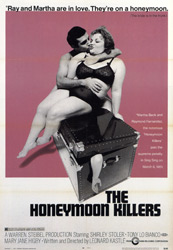
If you look for a positive outlook on humanity in your films, I would steer clear. This is one nasty, cruel little movie, about nasty cruel people, so don't let the campiness of the poster fool you. No one comes out looking good in this film. Even the victims. And by the time one of them does evoke our sympathy, we witness her moment of realization that she's going to die with an unflinching, seemingly unending closeup of her terrified eyes. It's rough stuff and way ahead of its time. Also worth noting is the interesting soundtrack with music by Gustav Mahler.

See more: Criterion couldn't do much of anything with the terrible audio, I recommend watching with subtitles.

The story is based on the true life drama of two outsiders, Martha Beck and Ray Fernandez who fell in love, swindled widows out of their money, and sometimes killed them too. They were executed in 1951 for their crimes.

Scorsese was initially set to direct, but the honor went instead to Lawrence Kastle, and he did an amazing job. Really a masterpiece that predates Taxi Driver and the less thanstellar Henry: Portrait of a Serial Killer. But even masterpieces can't always be for everyone.

If you look for a positive outlook on humanity in your films, I would steer clear. This is one nasty, cruel little movie, about nasty cruel people, so don't let the campiness of the poster fool you. No one comes out looking good in this film. Even the victims. And by the time one of them does evoke our sympathy, we witness her moment of realization that she's going to die with an unflinching, seemingly unending closeup of her terrified eyes. It's rough stuff and way ahead of its time. Also worth noting is the interesting soundtrack with music by Gustav Mahler.

See more: Movies


2 Comments →
Posted on February 16, 2009

Movies »It Happened One Night

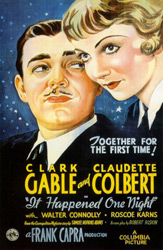
it happened one nightWhile Frank Capra might be best remembered for the feel good?holiday classic It's a Wonderful Life, I myself prefer the early screwball comedy It Happened One Night, a popular film that swept the Oscars but almost didn't happen. The production suffered a myriad of casting mishaps (Myrna Loy, Bette Davis, Carole Lombard, and Robert Montgomery all couldn't do the film, for various reasons), in fact both the porcelain Claudette Colbert and the rugged Clark Gable originally refused to star because they didn't like the script.

I can see why they might have been hesitant. It's a pretty straightforward plot that lacks the intricacies of a comedy like The Golddiggers of 1933 or The Women, but it's full of charm, in part due to the chemistry between the two leads. There's also a guy named called Shapely (which, coincidentally, is how he likes his women) who spouts all the film's best lines, lines like this: “When a cold mama gets hot, boy she sizzles – woo wee!”

Colbert plays the kind of rich brat who'd rather starve than eat raw vegetables trying to clandestinely travel from Miami to New York (by bus) to defy her father and marry an aviator he detests named King. Gable is an out of work, drunken journalist (he's also an expert at hitch hiking, dunking donuts, and giving piggy backs) who spots a headline grabbing story in the girl's journey and agrees to help her out on the condition that he gets an exclusive.

Colbert looks amazing in her few costume changes, both draped in an over-sized trench and elegant in a liquid white wedding gown with a flowered neckline and a long veil that looks great trailing behind her. Gable also caused some sartorial stir, according to a Hollywood anecdote, when he undressed for bed and was not wearing an undershirt — legend has it that undershirt sales plummeted by 75%.

Made over seventy years ago, there are bound to be some dated aspects. For example, her Colbert's father decides Gable is an okay guy and an ideal husband for his daughter after the suitor exclaims that she should be socked once a day, whether she deserves it of not. In another bit of arcane excitement, you'll learn what a aero-gyro is (SPOILER ALERT – it's got the body of an old plane and the propeller of a helicopter).

Still, just because it's of its time, that does not mean it needs to be remade; though I can easily imagine some moronic producer thinking this would be the perfect vehicle for true life rich girl Paris Hilton. And while that may seem like a pretty remote possibility, did you know that they're remaking Bonnie and Clyde with Hilary Duff right? Guess how Faye Dunaway feels about it?

See more: Movies


Be the first to leave a comment →
Posted on February 9, 2009

Movies »Manhattan Murder Mystery

manhattan murder mystery woody allen
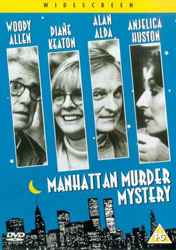
Whether or not Woody Allen has permanently lost his touch is a topic of great debate and discussion. While I think that we can all basically agree that the hey day is over (Celebrity, Curse of the Jade Scorpion and the one with Debra Messing are far from great works), films like Deconstructing Harry, Sweet and Lowdown, and Match Point
make a strong case that he's still pretty good (sometimes); and there's one particular late-period movie that seems to have charmed everyone whose seen it and strangely, it's probably one of the least seen (well, except for Cassandra's Dream).

The movie is Manhattan Murder Mystery and the cast of old reliables like Diane Keaton, Alan Alda, Angelica Houston, and Allen himself seem to be having so much fun on screen that they're really a pleasure to watch. It's a classic re-tooling of a noir plot – the seemingly least capable people become involved in solving an increasingly complicated crime; a concept that worked wonders just a few years later when it propelled the plot of The Big Lebowski.

In this case, the amateur sleuth is an expectedly skittish Keaton, a woman feeling her late middle age creep and wondering if she and her husband (Allen) have become too dull and predictable. She's primed for rampant speculation when her neighbor's wife dies suddenly and (possibly) mysteriously; with the aid of an equally insecure and adventure craving Alda, she becomes embroiled in stake outs and vanishing corpses.

The hijinks that ensue in this succinct little thriller are pleasurable enough to satisfy viewers on both sides of the “Has Woody Allen become a total dud?” debate; the scene with a prerecorded message played to capture the killer had me laughing like it was Annie Hall. Plus, it's perfect for “family viewing” – you can watch it with parents and/or grandparents and they're almost guaranteed to love it.

See more: Movies


Be the first to leave a comment →
Posted on February 2, 2009

Movies »Tokyo Drifter

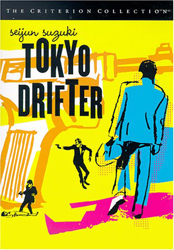
tokyo drifterSeijun Suzuki made over forty films in ten years; all cheapie B movies for the Nikkatsu Company, but he didn't let the low-brow circumstances cramp his visionary style and during his tenure he created Tokyo Drifter, a colorful, trippy yakuza action film. To be honest, there's not much to it as far as plot and script, it's convoluted in too many ways to count — characters show up without introductions and there are even two characters with the same name (our hero, Tetsu, and Viper Tetsu, who's out to kill Tetsu).

Even once the plot becomes clear, it hardly matters. The film would have been forgotten in no time if it weren't for its eye popping visuals. The story, though, just so you know, concerns the aforementioned Tetsu and his father figure boss trying to go straight after a life of major crime. Unfortunately a rival gang lead by perpetually sun-glassed Otsuka is inexplicably hell bent on dragging them out of retirement by obtaining the deed to their building through a duplicitous cash payment to their lender. Otsuka's gang is headquartered in a club called (wait for it)… Manhole Music Tea Room (amazing!) where the back office includes a conveniently located trap pitfall and kooky kids go wild on the dance floor.

Each scene is incredibly unforgettable, like a woman in tweed dying in front of stylized red light, a burning black car with fins, an injured hit man walking through the snow in a pale blue suit… Not to mention an epic fist fighting brawl in an old West themed saloon with more “thwak” sounds than an entire episode of the Batman TV show, and then there's the final shoot out in an all white abstract set that includes a piano used as a weapon.

This over-the-top dedication to style eventually got Suzuki black-listed from the movie industry. The Nikkatsu Company wanted him to play it straight but instead they got increasingly more outlandish and far out stuff. Just goes to show that 'the Man' has been afraid of 'The New' since forever, even in the seemingly innovative atmosphere of mid-60s Japan.

There's tons of good fashion to be seen including great bulky herringbone and slick, confidently non-black suits for men, and wild updos, great necklines, and a perfect floral and plaid combo that I've become obsessed with but is only on screen for a few seconds. The music is also fantastic. I loved the theme song, which is fortunate for me because it's repeated throughout many, many times in renditions vocal, instrumental, cabaret, and whistled.

See more: Movies


Be the first to leave a comment →
Posted on January 26, 2009

Movies »Willy Wonka and the Chocolate Factory

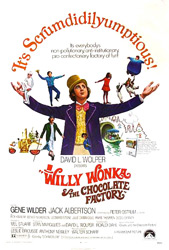
willy wonka and the chocolate factory“Where is fancy bred??In the heart or in the head?”?/em>

-Willy Wonka via The Merchant of Venice

I have a particular affection for a charming parable.?I suppose I find comfort in the didactic illustration of life's lucid lessons.?Willy Wonka and the Chocolate Factory is my most beloved.?It's wicked, delightful, witty and sweet, a brilliant rendering of Roald Dahl's screenplay and book.?Everything little thing, from score to set, is spectacular and perfect.?A more charming cast I can't recall.?Truly, “There is no life I know to compare with pure imagination.?Living there you'll be free if you truly wish to be.”

See more: Movies


Be the first to leave a comment →
Posted on January 19, 2009

Movies »Trouble Every Day

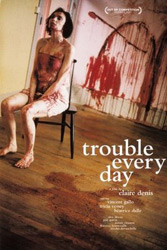
trouble every daySometimes a hard-to-find movie attains a frenzied cult status but ultimately disappoints once you finally track it down and watch it. Trouble Every Day has almost the opposite problem, despite absolutely glowing reviews like this one by Walter Chaw, “Mesmeric and entrancing, intuitive and impossibly intimate, the picture is alive with craft, intelligence, and the absolute courage of its macabre vision. Trouble Every Day is among the finest films of the year, but handle it with care” this dark and bloody vampire tale doesn't seem to be on everyone's lips.

But that's something I expect will change as more and more people happen across reviews and articles – maybe one day it will even be released here on DVD. And it will surely, as word of mouth builds, claim a rightful and honored place in vampire, horror, and strange cinema thanks to its masterful and artful blend of dread punctuated by extreme violence.

In some ways, it's really just a typical vampire story: a man of science travels to a foreign country to find his former colleague and stop him from unleashing the monster they created years before, but it's told in a very irregular fashion – at least for a horror movie. In fact, it's much more in step with contemporary French art house cinema. The film is nearly silent with little or no dialogue and sparse music, and for the first forty minutes or so you're left to decipher what's happening through the beautifully framed actions of the characters alone.

The result is a brooding mystery where each scene escalates the dread and prompts questions like: Who are these hot teenagers hell-bent on breaking into a lone woman's apartment? What are these scientific experiments that were so suddenly abandoned? And why can't Vincent Gallo stop masturbating?

It's a technique that may tax less patient viewers desiring the gore they imagine might come from the trailer instead of moody shots of a scarf fluttering over Parisian rooftops. But more patient viewers need not worry, you'll get blood and lots of it courtesy of the enigmatic and beautiful Beatrice Dalle. Never again will you imagine vampiric bloodletting as a clean, sanitary act, but one of total chaos. The film takes on vampirism as a medical condition, a horrible disease and, as a vampire, her plight is both frightening and sad; in one of her only lines in the film she tells her caretaker/lover that she is ready to die.

Dalle is by far the greatest embodiment of a vampire ever put on screen. She is irresistible, unleashed, uncontrollable, and truly not human. She's a siren of death that makes Hollywood's cloak clad, widow's peaked Dracula look like a joke. Her portrayal of a real-life monster is pure genius and I only wish the film had focused on her just a little more.

Gallo's off kilter performance is right on target as a frotteurist but hard to buy as a research chemist. Still, even for someone who finds him silly (like me), he doesn't ruin it all – even when he and his wife first punctuate the film's prolonged silence with dialogue that sounds like it was over-dubbed by shy children.

There's a pervasive sexuality throughout which, as any symbolist will tell you, is something a good vampire movie ought to have: nearly every scene includes kissing, touching, extreme close ups of skin, masturbating, small French breasts, panty removal and more masturbation, and it's all set to a great soundtrack by Tindersticks (not Frank Zappa).

You may not yet have heard of Trouble Every Day, but if you're a fan of shocking and arty horror cinema, I'll leave it to you to spread the word. You can find the DVD at my favorite place for rare and hard-to-find movies, J4Hi.

See more: Movies


Be the first to leave a comment →
Posted on January 12, 2009

Movies »Full Metal Jacket

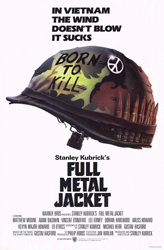
Full Metal Jacket Stanley KubrickStanley Kubrick's Full Metal Jacket is divided into two equally intense, but very different parts. The first, which takes place during Marine Corp training at Parris Island, is orderly, clean and neatly symmetrical, but totally chaotic under the constant verbal barrage of the ever quotable Drill Sergeant Harman, played with palpable fire by Gunnery Sergeant R. Lee Ermey. Ermey was initially hired to act only as a technical advisor to Kubrick (who felt Ermey wasn't quite harsh enough), but by making an audition tape of a 15 minute non-repetitive stream of insults while having tennis balls and oranges thrown at him, he was able not only to convince the director that could he play the part, but that he could write his own dialogue – something the controlling Kubrick never allowed with his actors before or since. The result is a searing and unsettling performance.

The Marine's brainwashing training, which is in no uncertain terms intended to create killers (“What do we do for a living, ladies!”?”KILL! KILL! KILL!”; “What makes the grass grow?” “BLOOD! BLOOD! BLOOD!”), is shown through relentless repetition in beautiful long shots courtesy of cinematographer Douglas Milsome, but it's excruciating to watch the system's effect on the weak and dim witted 'Gomer Pyle', played brilliantly by Vincent D'Onofrio. A man clearly not cut out for the Marines, he becomes a pariah; then something worse under the extreme pressures. He almost finds a friend in PVT 'Joker', the movie's central character (played by Matthew Modine – who we had forgotten used to be a star), but not quite.

The first act ends with a burst of intensity and violence. Without a chance to catch our breath, the very visually different second half begins in Vietnam where we see the results of unleashing trained killers on a country. Joker is now working for a military newspaper and he eventually makes his way to the front lines. The film concludes with a violent and shocking denouement.

A number of films about the Vietnam war experience were released around the same time: Platoon (1986) and Born on the Fourth of July (1989), Hamburger Hill (1987), Casualties of War (1989), Good Morning Vietnam (1987) and, about a decade before, Apocalypse Now (1979) and The Deer Hunter (1978). They all say the same thing because, ultimately, what else is there to say except that war is hell and Vietnam was the lowest depths of it? And while Kubrick's not quite as up front an Anti-war director as say Oliver Stone, here his intention to give an accurate portrayal of the war as it was results in perhaps the most stunning and disturbing work in the canon: there's no story telling conventions here, no melodrama, no story archs, no symbols; the characters come and go and even the protagonist seems at times deliberately, perhaps necessarily, detached by what is happening. It's a small movie, and not surprisingly it was based on one man's experience in the war, noted bibliophile Gus Hasford's now out of print semi autobiographical novel, The Short-Timers. Interpreted by Kubrick and Michael Herr (the author of Dispatches), it's a coldly unemotional cinematic impression of madness.

When I started putting together this list of things I've been meaning to do, Full Metal Jacket was the first thing I thought of. As a big Kubrick fan, it's ridiculous that I've never seen this movie before, but it was made extra difficult to view due to the fact that all my friends have seen it and were extremely reluctant to watch it again; unlike infinitely re watch-able fare like The Shining (which I always stop on whenever I pass it on the TV – no matter how much has already un-spooled) the intensity of this film is not something people are readily excited to revisit.

See more: Movies


Be the first to leave a comment →
Posted on January 5, 2009

Movies »Death Laid an Egg

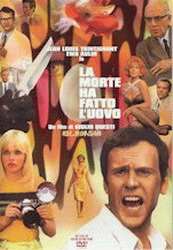
death laid an eggThe infamous Giallo, Death Laid an Egg, begins with total abstract disorientation: quick cuts, John Cage-y music and images of developing chicken embryos are followed by an arty murder. I'm pretty sure that the filmmakers put the murder up front to conceal the truth: that this movie is mostly (I swear) about the business of poultry farming and it takes almost an hour before you even get some awkward groping – and it's even longer before any more blood is spilled on lingerie. There's nearly an hour of confusing scenes and conversations about chicken farming equipment, insomnia, party planning, more chicken farming, and experiments in chicken farming (there's a laboratory that factors into the “plot” later) before the traditional Giallo components come into play.

The gorgeous Gina Lollobrigida is Anna, the owner of a chicken farm that she runs with much pride and joy (at one point she giggles through a friendly family photo shoot while holding up dead and mangled chickens) with her husband Marco (played by Jean-Louis Trintignant), who is having an affair with their assistant, the blonde and spacey Gabrielle (played by Ewa Aulin of Candy), who so pretty that her stumbling through abrupt non sequiturs like, “Hmm… I would like some delicious ice cream” is totally adorable.

Does it already seem like I'm describing a dream rather than a real film? If so, then I'm at least conveying some of the strangeness of this movie –?but just let me tell you about “the Association”. It's mentioned early in the film with some urgency, so it makes sense for one to expect some sort of Mafia type organization – but one would be wrong. It is, of course, The Poultry Association and their office houses a huge egg sculpture as well as a bunch of men running around as if they were on Wall Street shouting, “I'm buying! I'm buying! I'm buying everything!!!”

But despite the man on the phone's enthusiasm, the Association is facing big problems, for one (as the head of the Association declares in front of a huge painting of a rooster), “No one knows about poultry!” Just ignore the absurdity of that statement and sit back as the plot leads Marco into an uneasy working relationship with a young advertising hotshot named Mondaini (played by abstract painter and father of Leelee, Jean Sobieski) with whom he must work with on a PR campaign designed to alert the public to the fact that chickens and their eggs are available for purchase and consumption.

Fortunately, Mondaini has a new idea for some posters that “will take them by surprise,” which, quite frankly, took me by surprise too; this scene is so outrageous that we were barely able to breathe as tears of laughter streamed down our cheeks. I'll try to explain: Mondaini's ad campaign features “chickens as an integral part of society,” as a doctor, an engineer, even a soldier – the ludicrous images on the posters perfectly match his totally gonzo concept which, as he enthusiastically points out, is “Newer than tomorrow, preposterously new!” I agree… I think.

The other issue plaguing the Association is that chickens are continually born with heads and feet. This problem is resolved in the crazy chicken farm laboratory (I told you it comes back into play) where Anna is thrilled that her salaried geneticist has succeeded in spawning headless, feetless chickens. “Finally,” she tells her husband, “something we can share!” But Marco does not share her enthusiasm and in a fit of rage he brands the weird writhing sacks of veins and feathers “monsters”, then he proceeds to beat them to death with an over-sized metal bar. In an effort to heighten the weirdness, worms crawl out of the grotesque feathered lumps as he splits them open.

There's also hotel prostitution/sexual perversion subplot, a flaming car wreck, and a Seven Minutes in Heaven-like party game. For lack of a better descriptor, it's a supremely weird movie – and a fairly unforgettable one. Opinions vary drastically: some call it a masterpiece of the genre citing its truly unique editing and gorgeous cinematography (both DP, Dario Di Palma and star Jean-Louis Trintignant went on to work on highly influential films), while others declare it to be downright awful and ridiculous.

Either way, its status of being nearly impossible to find has gained it notoriority in certain nerdy film circles, and when offered a rare chance to view it, few who've heard the synopsis can resist (many thanks – and birthday wishes – to Matthew for tipping us off to this one). I got my copy (an excellent transfer) from J4HI, the same place I got the wonderful and equally difficult to find Roller Derby documentary Derby.
See more: Movies


Be the first to leave a comment →
Posted on December 28, 2008

Movies »Tokyo Godfathers

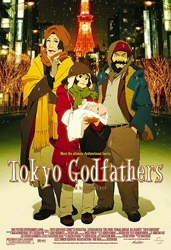
Tokyo GodfathersTokyo Godfathers is far too odd to become a new American Christmas classic, but if you want some decidedly different holiday fare this season, you could do far worse than this animation from the head script writer of Cowboy Bebop and something called Wolf's Rain. I believe both of those things are very popular, but to be perfectly honest I'm not all that up the Japanime and I think it's quite likely that big time fans of the genre will probably tell you that Tokyo Godfathers is actually far tamer and much less strange than I'm making it out to be… still it's no White Christmas.

The story, loosely based on the western 3 Godfathers, follows three vagrants (a young runaway, a gruff failure, and a dramatic tranny) who find an abandoned baby on Christmas Eve. Truths are revealed, heart strings pulled, and miraculous coincidences abound.

It's a movie teeming with bulging eyes, derogatory language, video game music, surreal dream sequences, sassy angels, periodic haikus, ancient stories about devils, mafia assassinations and, to top it all off, dancing skyscrapers. In short, it's chock full of wonderful, wonderful Japanese strangeness with a heartfelt plot and some nice artwork.

See more: Movies


Be the first to leave a comment →
Posted on December 22, 2008