Books »Do Everything in the Dark

by Gary Indiana (2003)

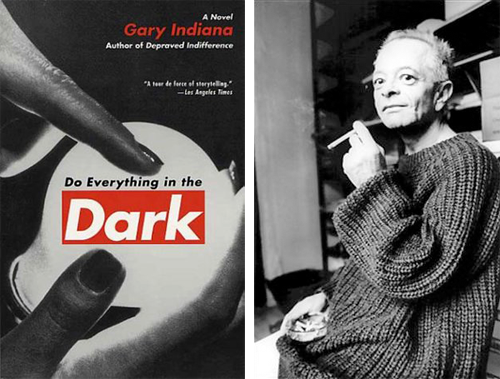
Gary Indiana‘s Do Everything in the Dark, divulges the inner turmoil of New York’s avant garde from a bygone era. They face old age and irrelevance; a justifiable fear considering I had no idea what real life figures of the city’s bohemian past most of the characters were based on – with the exception of Susan Sontag (and only that because I read so).

The often hilarious book reminds me of Slaves of New York by Tama Janowitz and the awesome Answered Prayers by Truman Capote. Like those authors, Indiana makes the best kind of storyteller – he can give vivid, sharp, witty, and sometimes harsh portraits of the vain, eccentric, insane, self absorbed and nasty artists, wanna be artists and hangers on that are interesting to hear about but not so much to be friends with ourselves.

Not that Indiana is all venom. With exceptions, he genuinely loves his subjects, who are after all, his dearest friends and in turn we love them too – at least some of them. I was most taken with the letter exchanges between Arthur, stuck among society vultures on a Spanish Island and Jesse, whoring it up with busboys in Istanbul.

Other characters I found less intriguing like a couple of young good looking junkies – but if ever you find yourself bored one moment, Indiana ping pongs the story around frequently.

The novel, which was written after 9/11 but clearly and deliberately depicting a pre-9/11 New York is in turns raunchy, touching, and clever. There were so many perfectly worded lines that I wish I’d kept a highlighter on me while reading. I didn’t, but here’s on example:

“I know you’ve blown a junkie or two along the trail; if you’ve blown one you really have blown them all. I’d rather eat ice cream. You can have that engraved on my tombstone if I happen to go first”

I am surprised his work hasn’t found a larger audience among the young and hip trying to live their own Bohemia (though this time in condos).
See more: Books


Be the first to leave a comment →
Posted on May 18, 2011

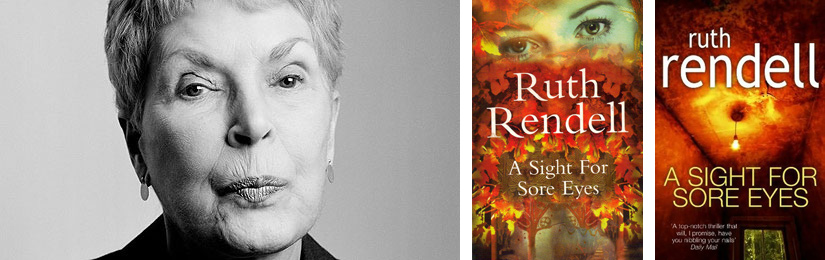
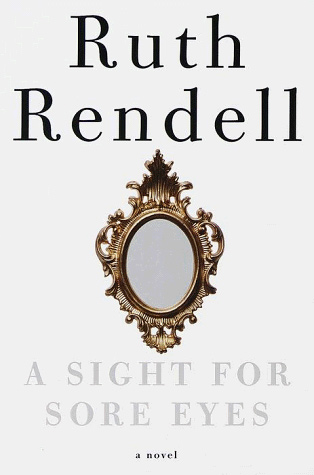
Books »A Sight for Sore Eyes

by Ruth Rendell (1998)

So, it’s not exactly like I had A is for Alibi sticking out of my back pocket, but even I know reading mass market paper back women’s mysteries with titles like A Sight for Sore Eyes and the author’s name printed in gold is not “cool”. But! When it’s as compelling and unexpected as this Ruth Randell thriller, it sure is pleasurable.

Beach reading time is upon us and if you’re tired of predictable master mind serial killers and tough but gorgeous women detectives, this odd tale of coincidence and murder will be refreshing.

While the psychology might be a tad simplified, Rendell does take us into the minds of her characters, even the most evil ones and gives us a very vivid picture of them and their surroundings. Even a minor character, like a nasty shop owner or a noisy neighbor feel like real people rather than contrived mystery novel plot elements.

As for the main protagonists, you have a beautiful teen whose youth was shattered by her mother’s murder and whose adolescence is marred by an insanely over protective step mother; you also have a vain former hippie living in a London mansion, and finally a psychopath young man who never knew any form of love as a child who despises humanity as much as he praises and adores beautiful objects.

All three lives intertwine in a way I thought would be rote and predictable but was pleasantly surprised to find it stranger, more unusual and almost grimly humorous.

I don’t know too much about author Rendell but she is highly praised among her peers and I plan to look to her again next time I’m in beach reading mode.

See more: Books


Be the first to leave a comment →
Posted on May 4, 2011

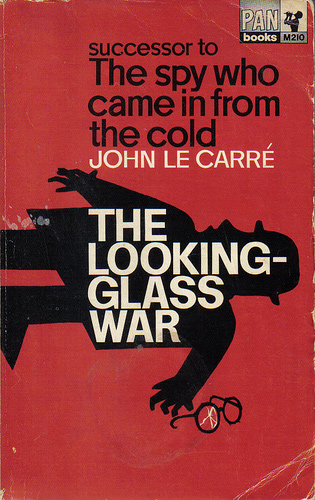
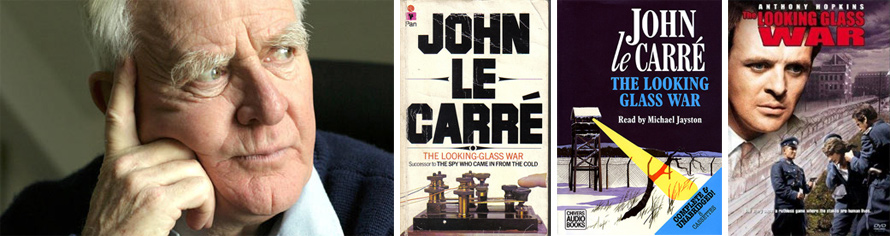
Books »The Looking Glass War

by John Le Carre (1965)

At this point I really shouldn’t be shocked that I share a common interest: a love of John Le Carre, with those greying men in neckties and with golf habits I always hear about but it still surprises me (Does this mean they’re right about Clive Cussler too?). Le Carre is a magnificent story teller, his world of spies and espionage is uniquely intriguing in that is doesn’t include gadgets, studly men and super villains but rather muddled intelligence, old men with often tired or unforgiving wives, and enemies that are vague at best. In The Looking Glass War, the vagueness couldn’t be more pronounced. Set during the Cold War in a department known only as “The Department”, some sketchy intelligence leads to even an even sketchier mission.

The “heroes” are men who thrived during the War and knew exactly their roles within it but who are now feeling ignored, confused and washed up against the less obvious tactics and rules of a War waged without guns and maneuvering. Out of date on the newest technology, flailing when it comes to covert operations and desperate for the honor and respect their previous positions use to garner, the Department headed by Leclerc is overly zealous to send a man into Germany to investigate some blurry photos with possibly significant implications. The recruited agent, a Polish, well dressed ladies man named Leiser also had his heyday years earlier but is completely unaware that he’s putting his life in the hands of those equally rusty and clumsy. After spending time with the men as they prepare for the mission one can see that tragedy is inevitable.

Le Carre always provides a realistic portrayal of spying, but apparently the frank banality of this one made it less popular than his other novels. I found it compelling and a great study of characters. Even our favorite, George Smiley makes several appearances.

It was adapted into a movie in 1969 starring Anthony Hopkins. In my usual habit, I cast it in my mind with James McAvoy as the young Avery, any actor that looks similar to Marco Pierre White as Leiser, Stephen Frye as Woolcroft, Michael Gambon as Haldane, since Alec Guinness has passed, Sir Ian McKellan as Smiley and for some reason I could only see Magnum PI’s John Hillerman as Leclerc.

See more: Books


Be the first to leave a comment →
Posted on April 20, 2011

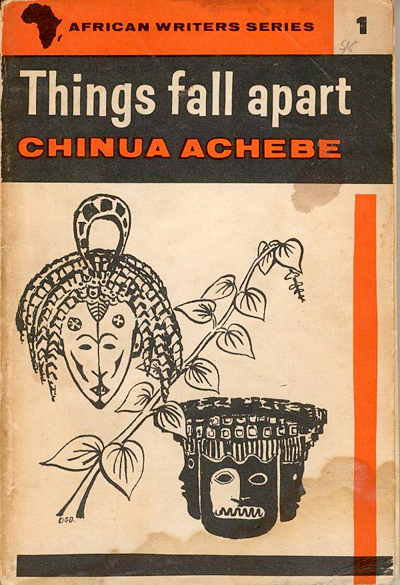
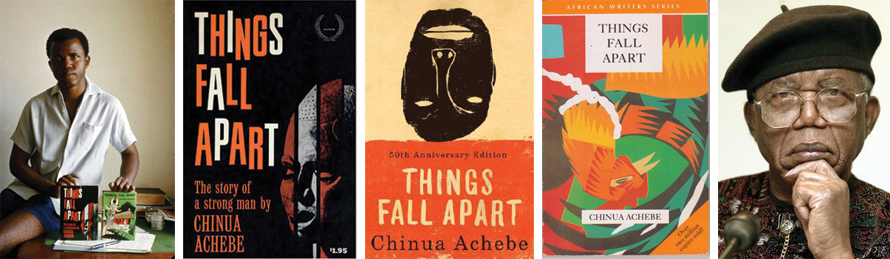
Books »Things Fall Apart

by Chinua Achebe (1958)

Things Fall Apart was a milestone in African Lit. It was one of the first successful novels about Africa and written by an African. It introduced the world to tribal living in Nigeria, specifically the Igbo culture at the time of the 19th century invasion of missionaries and colonists. It’s no less interesting decades later and no less heartbreaking.

Chronicling the life of a fierce warrior named Okonkwo, author Chinua Achebe is economical in his writing which is matter of fact and without dramatic flourishes and lengthy descriptions. Events, as small as women preparing for a feast and as powerful as the murder of a son are described frankly and simply, which makes them all the more affecting. It reflects the traditional stories that are woven into the novel.

The novel is common high school reading, made clear to me in my used book that includes the scrawled inscription “I hate this book!” from some ninth grader past, but this is the first time I’ve read it. I enjoyed it much, much more than the book’s previous owner.

See more: Books


Be the first to leave a comment →
Posted on March 24, 2011

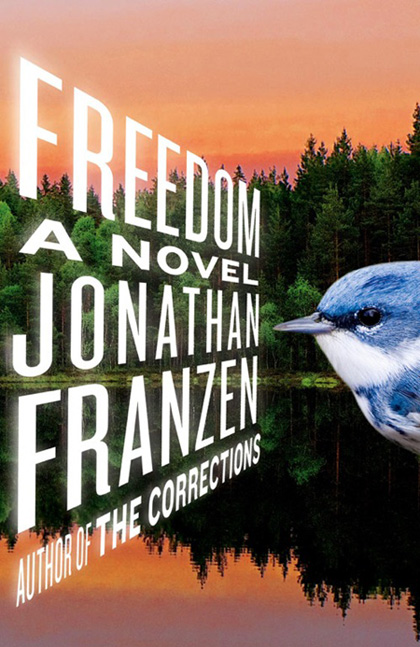
Books »Freedom

by Jonathan Franzen (2010)

While I can say that Jonathan Franzen probably deserves most of the accolades and praise for being the great American novelist, I also have to say, having just finished Freedom “Phew, I’m glad that’s over!” He’s a master at mucking in the dirt and grime of the worst in people and their messed up relationships, but I was happy to leave the Berglunds, whom Freedom chronicles, behind me.

Maybe it was tougher reading for me since I just had a son and one of the most damaged relationships is between the mother and her teenage son – but I definitely understand why friends struggled with the intensity of The Corrections, his previous novel that I found a bit more amusing and easy to read.

Here Franzen, or at least his characters, seem deeply angrier than he’s ever written before, a very apt and true portrait of our country today, I think. And while Corrections had some humor (at least I remember it having some – maybe not??) here the relief from human pain is filled with detailed information about corrupt businesses in the Iraq War, the threat of animal endangerment and overpopulation, and the complexities of environmental versus human salvation.

The writing is so sharp, so vivid and intelligent in it’s detail – I mean, it’s brilliant – but also so hard to escape, so difficult to release yourself from when you put the book down. Jim even asked me to finish it soon to improve on my mood!

I seem to be writing more about how the book made me feel than the book itself –  because on paper, a simple plot synopsis doesn’t suffice. Patty and Walter are married, they have two children and their lives get messy. Every time a person achieves some happiness, it’s violently torn from them, his message being, perhaps, that life is not fair and when it is, don’t expect it to last.

You have to read it to get more than that, and despite that this write up sounds more like a warning than a recommendation, I do highly recommend it. Just give yourself room to get pretty bummed out under its influence.

See more: Books


Be the first to leave a comment →
Posted on March 16, 2011

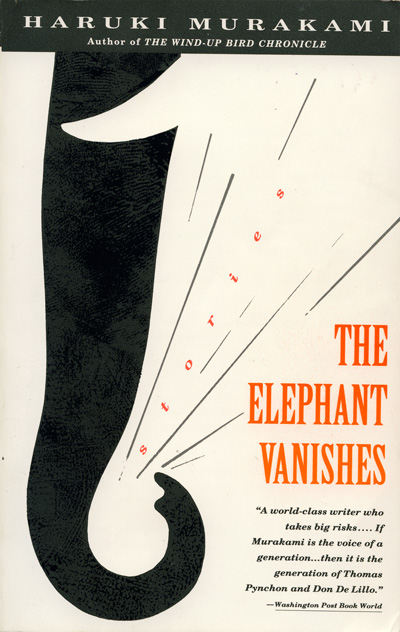
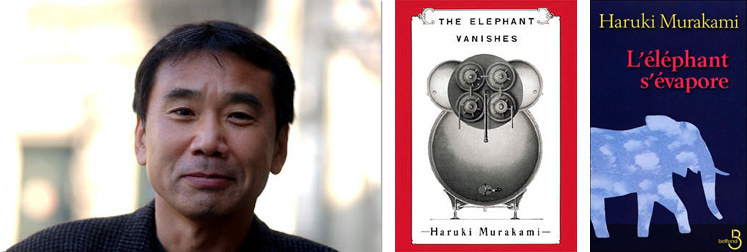
Books »The Elephant Vanishes

by Haruki Murakami (1993)

Murakami’s short story collection The Elephant Vanishes opens with what would become the first chapter of The Wind Up Bird Chronicle, a book that consumed and mesmerized me like only few great novels can. I tried to repeat that spell with his other works, but only came as close with Hard Boiled Wonderland and the End of the World.

After finishing the second story, I was worried that this would be another miss for me and Murakami – though a miss from him is still guaranteed to be more curious and interesting than many authors’ best so I kept reading.

I was finally drawn in completely by the story Sleep, a subtly creepy story of a woman who lives two lives when she suddenly no longer sleeps. It’s a masterful study of inexplicable fears come to life, fears that sit dormant below the surface of the toil and small joys of everyday living.

Other notable favorites are Barn Burning, Family Affair, TV People, The Dancing Dwarf, and The Last Lawn of the Afternoon. Of course, every reader will have their own opinions depending on their tolerance for the bizarre surrealism that peppers his writing with such dark grace.

The best stories here have his hallmark gift for mood. You feel the people and places in essence if not in detail and are transported to strange territories that are both very near and very far from our own lives.

See more: Books


Be the first to leave a comment →
Posted on February 11, 2011

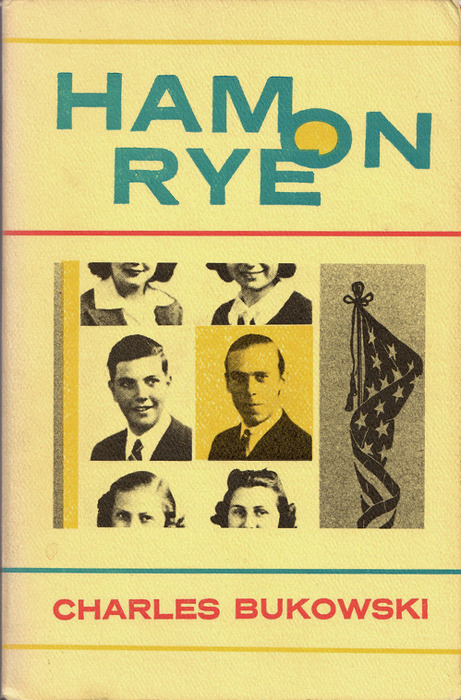
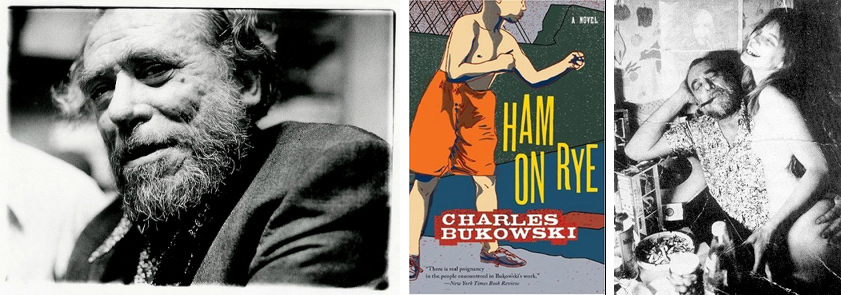
Books »Ham On Rye

by Charles Bukowski (1982)

There is a great tradition in American literature of tough men telling masturbation soaked tales of youthful losers. I can’t say it’s my go-to source for reading, which is probably why Ham on Rye has sat on my book shelves for over a decade. I bought it in my high school years, exactly the right time to want to be into Bukowski. But I never was.

I wondered how his coarse, depressing stuff would read with an older me – and have a loose resolution to watch, read, and listen to artists I’ve never experienced but am curious about. I started with Tom Wolfe (big success) and Bukowski was right next to him on the shelf.

Like other rough and manly men of the written word, his writing is to the point. it’s sparse but still conveys a very vivid picture. The picture Ham and Rye shows is this: it sucked to be Charles Bukowski as a kid, or I should say, Hank Chinaski, his semi autobiographical anti-hero. If anyone asked him why he drank, he could probably just plop this book down on the table.

One almost expects this portrait of a young man, forced to the outside fringes of society to end with a mass murder perpetrated by the shunned, horny misanthrope rather than a penny arcade defeat. But true to Bukowski’s negative eye on the world – things end more poignantly with a whimper.

I was surprised to enjoy this book (well, enjoy is maybe too joyful a word). Though I do have a weird knack for reading bleak stuff when it’s at odds with my life (Miss Lonelyhearts before I got married, this one as Van sleeps peacefully next to me).

See more: Books


Be the first to leave a comment →
Posted on February 2, 2011

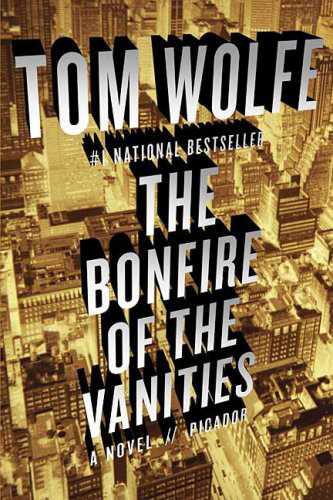
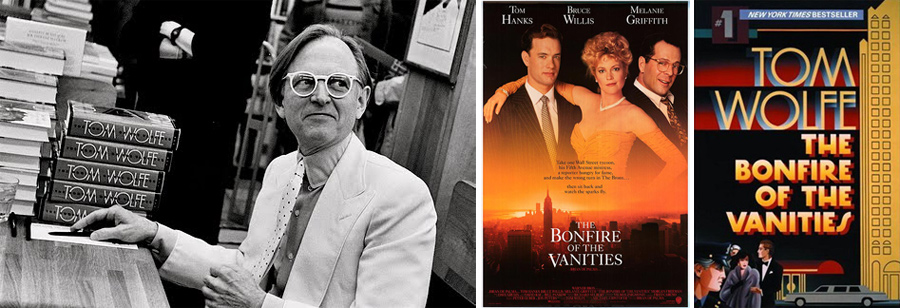
Books »Bonfire of the Vanities

by Tom Wolfe (1987)

There are people who know how to tell a story and those who don’t. Tom Wolfe can tell a story. With an ear for dialogue, a sharp eye for details, and an almost tabloid journalism joy for exposing and wallowing in the character’s flaws, in his first fictional novel, The Bonfire of the Vanities, Wolfe is wry, smart and highly entertaining.

Little wonder that it was a national best seller that spawned a (reportedly terrible and definitely miscast) star studded movie.

The writing is Dickens by way of Richard Price. In less deft hands, lacking the dark sense of humor, this could have been a self riteous bore, but it’s crisp, witty and makes me want to read more from the well dressed icon.

Set in the mid 80’s Bonfire is the story of one Sherman McCoy, a Wall Street millionaire who ends up embroiled in scandal when he and his mistress commit hit and run while lost in the streets of the Bronx. Race, class warfare, politics, greed, and yellow journalism all play their part in this epic story.

See more: Books


Be the first to leave a comment →
Posted on January 30, 2011

Books »Dr. Suess Beginner Book Collection

by Dr. Seuss

As you can see, Van is just overwhelmed by the bounty of fun time Dr. Seuss reading the Beginner Book Collection offers. I am sure we can all quote from the included Green Eggs and Ham, Hop on Pop, One Fish Two Fish Red Fish Blue Fish and Cat in the Hat but I can tell you it’s such a pleasure to revisit these classics as a mother. When he’s in a reading mood nothing gets him squealing one of these quirky, silly rhymes. This is a great gift for new parents (thanks mom for ours!)

See more: Books


Be the first to leave a comment →
Posted on January 18, 2011

Books »The Lady in the Lake

by Raymond Chandler (1944)

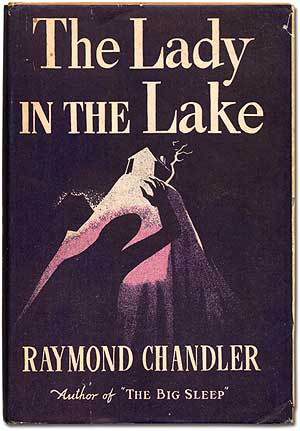
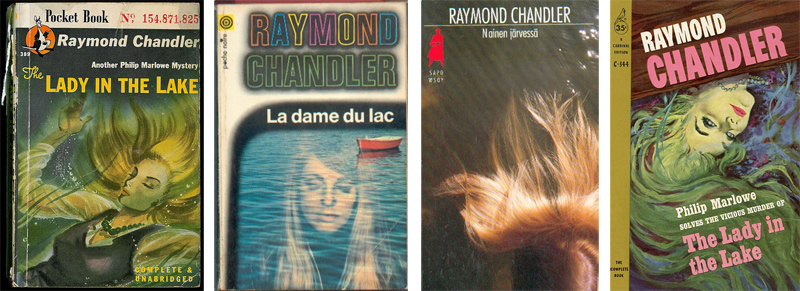
While I know the Raymond Chandler character Philip Marlowe well from movies (and I don’t care what people say – Elliot Gould was genius), The Lady in the Lake is actually my first time reading one of the novels. Set, as expected, in the streets of LA, this one also takes us to the tranquil vacation lakes surrounding the seedy town. Of course, they turn out to be just as deadly when our private eye is sent looking, simply enough, for a rich man’s missing wife.

Nothing is ever so simple though, in a snappy noir, so murder, villains, scandal, witty dialogue, and plot twists ensue. While I guessed the major plot twist far too soon (blame a healthy education in murder mysteries), like most noirs, the plot isn’t always the star of the show, it’s the long, often punch-in-the-jaw getting there that’s fun.

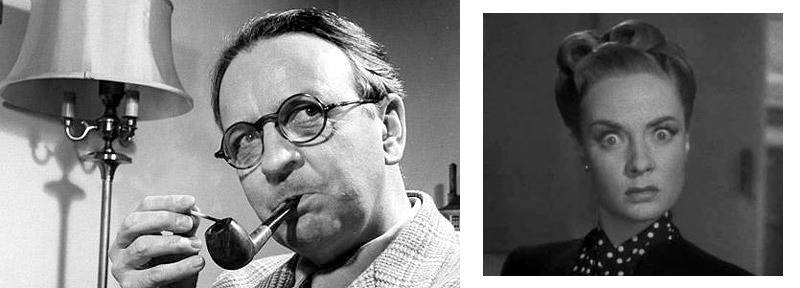
Some say this is one of Chandler’s weaker efforts, which only makes me excited to read more since I quite enjoyed it. Not as enjoyable, unfortunately, is the 1947 film adaptation which features a gimmicky first person perspective (all characters address the audience with exaggerated expressions) which wears off after a couple minutes. Strangely, they made it into a “Christmas” themed movie too – my guess is hoping for box office returns during the holidays. Yes, stick to the far more nuanced and clever book – even cranky Chandler took his name off the film (and he wrote it!).

See more: Books


Be the first to leave a comment →
Posted on January 12, 2011